Can Cornices Be Repaired Rather Than Replaced?
A crack running along the cornice line can make an otherwise well-kept room look tired. The good news is that, in many cases, can cornices be repaired not replaced is not just a hopeful question - it is the sensible, lower-disruption option. A properly repaired cornice should look straight, continuous and ready for paint, without an obvious patch or mismatched section.
The right answer depends on what has caused the damage, the material and profile of the cornice, and whether the surrounding ceiling or wall is still sound. Small cracks, dents and isolated water marks are often repairable. Extensive water damage, crumbling material or a profile that has pulled away over a long run may call for replacement instead.
When cornices can be repaired rather than replaced
Most modern Perth homes have plaster cornices, often with a simple cove or stepped profile. These are well suited to careful repair when the damage is localised. Hairline cracking at joins, small chips from moving furniture, nail holes, separated mitres and minor sections loosened by movement can usually be restored without removing the whole length.
The key is to treat the cause as well as the visible defect. A cornice crack can result from normal seasonal movement, a ceiling joint that has moved, a poorly fixed original join or moisture above the ceiling. Filling over an active problem may look acceptable for a short time, then crack again after painting.
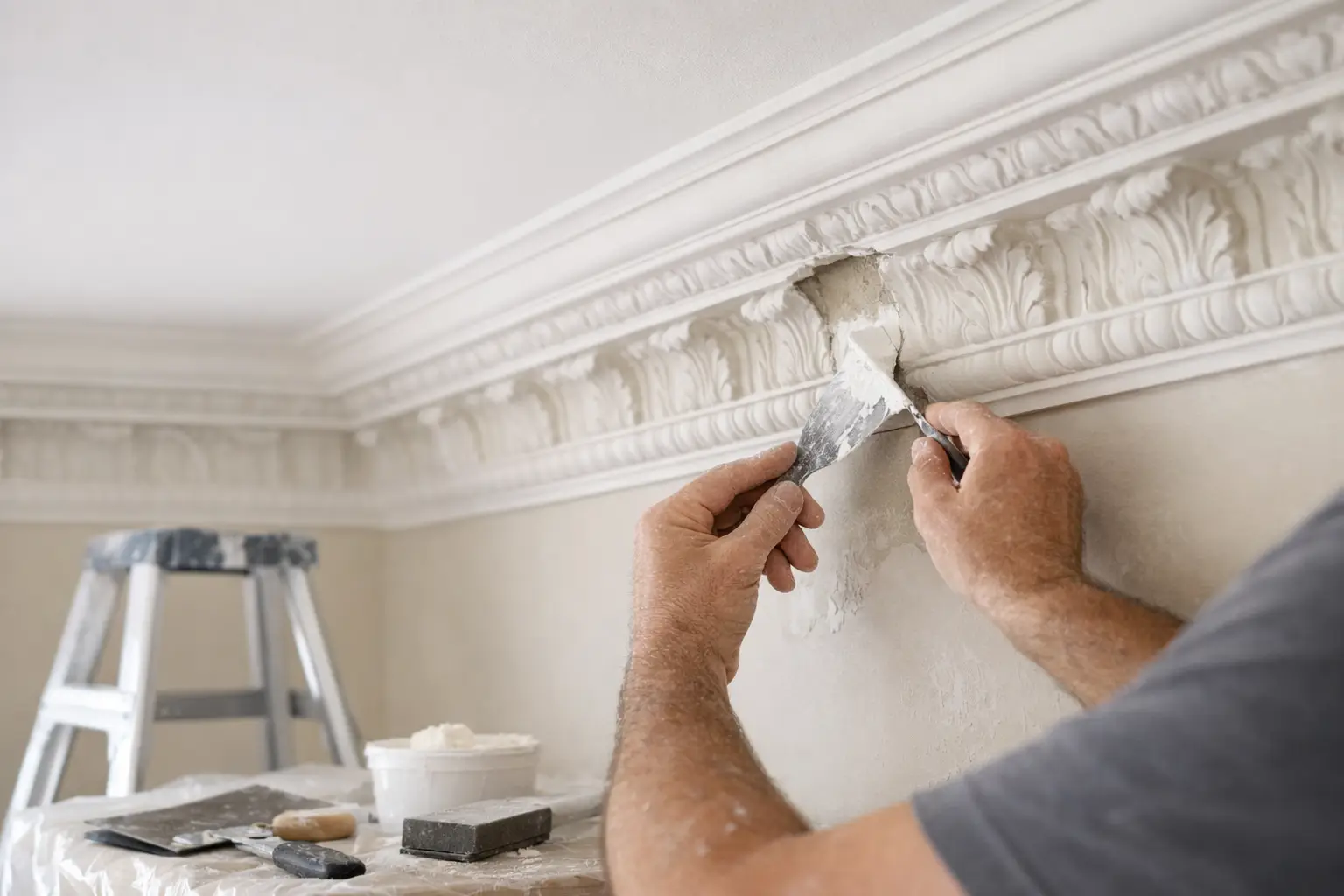
A skilled repair begins with checking the cornice, ceiling and wall together. Loose material is removed, damaged edges are stabilised and the gap is prepared so the repair compound has something solid to bond to. Where necessary, the joint is reinforced before the profile is rebuilt. The final surface is sanded and blended into the existing lines, not simply filled flat.
For minor damage, repairing the existing cornice preserves the room's original proportions and avoids disturbing paint, ceiling finishes and adjacent walls. It can also be the best route for a decorative profile that would be difficult to source today.
Common repairs that usually work well
A clean repair is commonly possible for a small impact dent, a crack at a cornice join, a short missing corner, an open mitre, or shallow staining left after a leak has been fixed. In each case, the surrounding cornice needs to be firm and dry.
Water damage deserves more caution. A faint stain on a solid cornice may only need sealing and paint preparation once the leak is resolved. If the cornice feels soft, swollen, powdery or detached, the affected section may need to come out. Repairing over damp or deteriorated material is false economy.
When replacing a section is the better choice
Replacement is not a failure of the repair process. Sometimes it is the more reliable way to achieve a straight, durable and paint-ready finish.
A section is usually better replaced when damage extends over a long length, the cornice has badly sagged, repeated repairs have built up uneven layers, or the profile has broken down beyond a clean reconstruction. Severe water ingress, termite damage and major ceiling movement can also leave too little stable material to work with.
The practical middle ground is often sectional replacement, not replacing every cornice in the room. A damaged length can be removed, a matching profile installed, and the joins carefully set and blended. This keeps disruption contained while giving the repair a sound base.
Matching matters. A new off-the-shelf cornice may be close in shape but still look wrong beside an older profile, especially in hallways and rooms with strong side lighting. Heritage homes and older Perth properties can have deeper, more decorative mouldings that need to be matched by profile, size and projection from the wall. The difference may only be a few millimetres, but it is noticeable once the room is painted.
What makes a cornice repair invisible?
An invisible repair is mostly about preparation and profile work. Paint can hide very fine sanding marks, but it cannot disguise a wavy edge, a sunken join or a replacement piece that sits proud of the existing cornice.
First, the damaged area must be opened up enough to remove weak material. Then the repair is built in controlled layers, allowing each layer to set before shaping the next. On a curved cove, the curve needs to flow naturally from either side. On a decorative cornice, the steps, beads and shadow lines need to continue through the repaired area.
Sanding is equally important. The aim is not to sand the repair aggressively until it is flat. It is to feather the transition so light moves across the cornice without catching a ridge. A final inspection from different angles helps reveal defects that may not show when standing directly underneath.
Paint preparation finishes the job. Stains may require a suitable sealer, while fresh compound needs to be fully dry and dust-free before priming and painting. If the rest of the cornice has aged or yellowed slightly, repainting the full cornice line in the room usually gives the most even result.
Why cracks keep returning
A repaired crack should not be expected to reappear simply because it was repaired. When it does return, there is often movement underneath the surface.
Ceiling sheets can move at their joints. Roof-space moisture, roof leaks, truss movement or inadequate fixing may affect the ceiling line. In some homes, settling and normal expansion can open mitres where two cornice lengths meet. A good assessment separates a cosmetic crack from a symptom of a wider ceiling issue.
This is why a quick dab of filler is rarely the whole answer. It may be appropriate for a tiny stable hairline, but a visible or recurring gap needs proper preparation, reinforcement where required, and a check of the surrounding lining. The neatest finish comes from a repair that is designed to last, not one that merely looks better on the day.
Repair versus replacement: what affects the cost?
There is no useful one-price answer without seeing the damage. The size of the affected area matters, but access, height, profile detail, extent of ceiling damage and paint preparation can matter just as much.
A small crack at standard ceiling height may be a straightforward repair. A water-damaged cornice beside a failed ceiling joint is a different scope of work. Likewise, replacing a plain cove section is generally simpler than reproducing an ornate heritage profile or blending a new piece into heavily textured walls.
For homeowners, the most useful quote is one that clearly states whether the issue will be repaired or replaced, what is included in surface preparation, and whether painting is part of the work. Fixed pricing and a clear scope remove the uncertainty that often comes with repair jobs.
Can you repair cornices yourself?
Small cosmetic chips can be tempting DIY work, particularly before painting a room. However, cornices are more visible than many people expect. Ceiling-level light casts shadows across every ridge, and a repair that feels smooth by hand can still show clearly after a fresh coat of paint.
DIY is most suitable for a very small, stable blemish where an exact profile is not involved. If there is water damage, a recurring crack, loose cornice, high ceiling, decorative profile or uncertainty about the cause, bringing in a specialist is usually the safer choice. It avoids turning a contained repair into a larger replacement job.
At Yong's Carpentry, the hands that quote your job are the hands that finish it. That owner-led approach is particularly valuable for cornice work, where assessing the cause, matching the profile and taking care with the final blend all affect the result.
Getting the right result in your home
Before arranging repairs, take note of when the crack appeared and whether it has changed. Check for signs of a roof leak after rain, staining, peeling paint or sagging nearby. Avoid scraping at damaged areas or painting over moisture before the source has been dealt with.
An on-site assessment lets a tradesperson judge whether the cornice can be retained, whether a short section should be replaced, and whether the ceiling needs attention first. For most localised damage, careful repair is entirely achievable. The goal is simple: protect the home, keep the work area tidy, and leave a crisp cornice line that does not draw the eye for the wrong reason.