Cornice Replacement Service for Clean Finishes
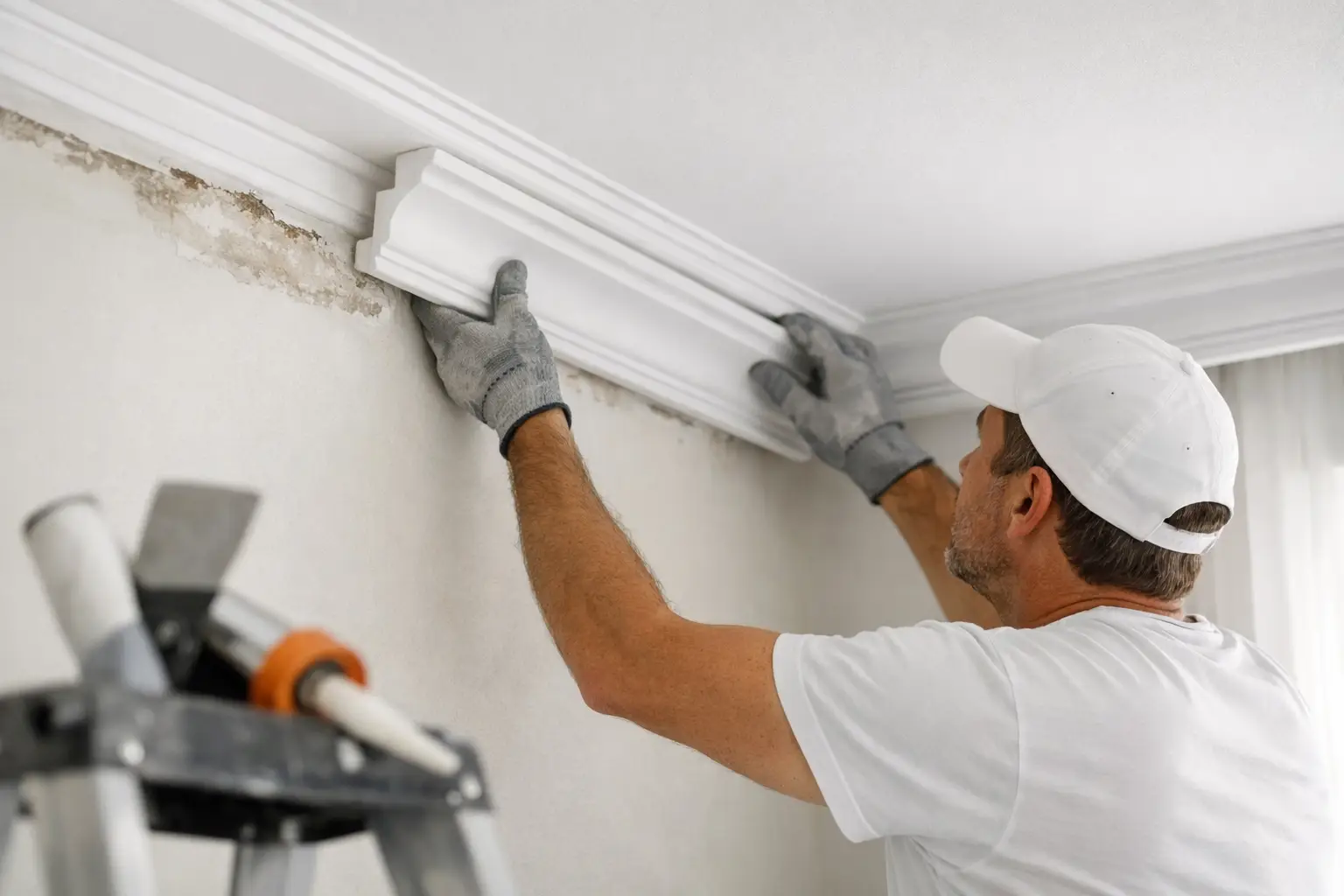
A cracked cornice can make the whole room look tired, even when the rest of the ceiling is sound. If you are looking for a cornice replacement service, the real question is usually not just how to swap one section out. It is whether the new work will match properly, hold its line, and blend into the room without looking patched.
That is where experience matters. Cornice work sits right at eye level where walls and ceilings meet, so even small inconsistencies stand out. Uneven joins, soft edges, poor profile matching or a wavy finish can turn what should be a tidy repair into something you notice every day.
When a cornice replacement service makes sense
Not every damaged cornice needs to be fully replaced. In some homes, a localised repair is the better option, especially if the damage is minor and the profile is still intact. Small cracks, slight movement at joins, or isolated chips can often be repaired and prepared for paint without removing long runs.
Replacement becomes the better choice when the cornice is water damaged, crumbling, badly separated from the wall or ceiling, or missing whole sections. It also makes sense when previous patching has left uneven lines, or when a renovation changes the ceiling layout and the existing cornice no longer works with the room.
There is always a balance between cost, finish quality and how visible the problem area is. In a spare room, a repair may be perfectly reasonable. In a main living area, entry or heritage-style room, replacement can be the more sensible long-term option because the finish needs to look consistent from every angle.
What makes cornice replacement harder than it looks
Cornice is one of those trades that seems simple until you see poor work up close. The challenge is not only removing damaged material. It is keeping adjacent surfaces intact, matching the profile, setting clean mitres in corners, and leaving the area ready for painting.
Older homes add another layer of complexity. Some profiles are no longer standard, and slight differences in shape can be obvious once painted. A good cornice replacement service should be able to assess whether an existing profile can be matched, copied closely, or blended in a way that looks natural across the room.
Ceiling movement also matters. If cracks or separation happened because of structural movement, moisture ingress or previous installation issues, replacing the cornice alone may not solve the problem. The underlying cause needs to be identified first. Otherwise, even neat new work may crack again.
Matching the existing profile
This is often the deciding factor between an average result and an invisible one. Standard modern profiles are usually straightforward to source. Decorative, older or less common profiles can take more planning.
Sometimes an exact match is possible. Sometimes the closest available profile is used across a full wall or full room so the finish stays visually consistent. The right approach depends on how much cornice is affected, how exposed the room is, and whether the property has heritage details worth preserving carefully.
Getting the joins right
Even with the correct profile, joins can give the work away. Cornice needs to sit straight, meet tightly at corners and transition smoothly into existing sections. If the adhesive work, setting or sanding is rushed, the line can look bumpy or overworked once painted.
That is why tidy preparation matters as much as installation. Protection, careful cutting and clean finishing all affect the final look.
What to expect from a proper cornice replacement service
Homeowners usually want the same few things - a clear quote, honest advice on whether repair or replacement is better, and a finish that does not create extra work later. A proper service should start with an on-site assessment, because photos rarely show enough detail to judge profile depth, ceiling condition or previous repairs accurately.
From there, the scope should be clear. Which sections are being removed, whether profile matching is required, what surface preparation is included, and whether the area will be left paint-ready should all be discussed upfront. Fixed pricing matters here because hidden extras often appear when older plaster and ceiling lines are opened up.
The process itself should be controlled and tidy. Removing damaged cornice can create dust and loose material, especially in older rooms. Floors and nearby surfaces should be protected, rubbish removed, and the workspace kept manageable in a lived-in home.
For many clients, direct communication is just as important as the technical side. When the same tradesperson handles quoting and completion, there is less room for confusion. The assessment made at the start carries through to the finished work.
Repair or replace? It depends on the room and the damage
There is no one-size-fits-all answer. A narrow ceiling crack near a cornice join may only need stabilising, setting and repainting. A sagging section after water damage usually points towards replacement. If the room is being renovated anyway, replacing the cornice may also make sense to achieve a cleaner line overall.
Budget plays a role, but so does visibility. In high-traffic areas, small imperfections are more noticeable. If the room has feature lighting, long sightlines or decorative detail, the standard for matching and straightness needs to be higher.
Landlords and property improvers often need a practical balance. The finish should be neat, durable and presentable without overcapitalising. Owner-occupiers renovating their long-term home may place more value on profile accuracy and invisible blending. Neither approach is wrong. The right recommendation should reflect how the space is used.
Why ceiling and wall condition matters
Cornice does not exist in isolation. It connects two surfaces, so if either side is uneven, cracked or moisture affected, replacement becomes more than a simple trim job.
In some cases, the ceiling edge may need repair before new cornice can be fixed properly. In others, wall lining may need patching or straightening so the new section does not highlight existing defects. This is where a specialist in interior wall and ceiling work has an advantage. The job can be assessed as a whole rather than treated as a narrow add-on.
That broader view also helps with renovations. If bulkheads, recessed lighting coves or ceiling changes are being added, cornice lines need to work with the new layout. Good planning avoids awkward transitions and unnecessary rework later.
Choosing a tradesperson for cornice replacement service
Price matters, but it should not be the only filter. With cornice, poor workmanship is hard to hide and often expensive to fix once painted. It is worth looking for someone who can explain the likely cause of damage, outline whether repair or replacement is more suitable, and be upfront about how matching will be handled.
Ask practical questions. Will the work be personally completed or passed to a crew? Is the quote fixed? Will the area be left tidy and paint-ready? Is there a workmanship guarantee? Clear answers usually say a lot about how the job will run.
For Perth homeowners, older homes and renovated family properties often need a more careful approach than quick patch-and-go work. That is where a boutique operator can make a real difference. At Yong's Carpentry, the hands that quote the job are the hands that finish it, which gives clients direct accountability from first inspection to final clean-up.
A clean finish is the point
Most people do not book a cornice replacement because they want new cornice for its own sake. They want the room to look right again. They want the crack gone, the water damage repaired properly, and the line between wall and ceiling to look clean once the paint goes on.
That only happens when the work is assessed honestly, matched carefully and finished with patience. If you are weighing up a cornice replacement service, focus less on how quickly the old section can be removed and more on how well the new work will disappear into the room. That is usually the difference between a repair you can live with and a finish you no longer have to think about.