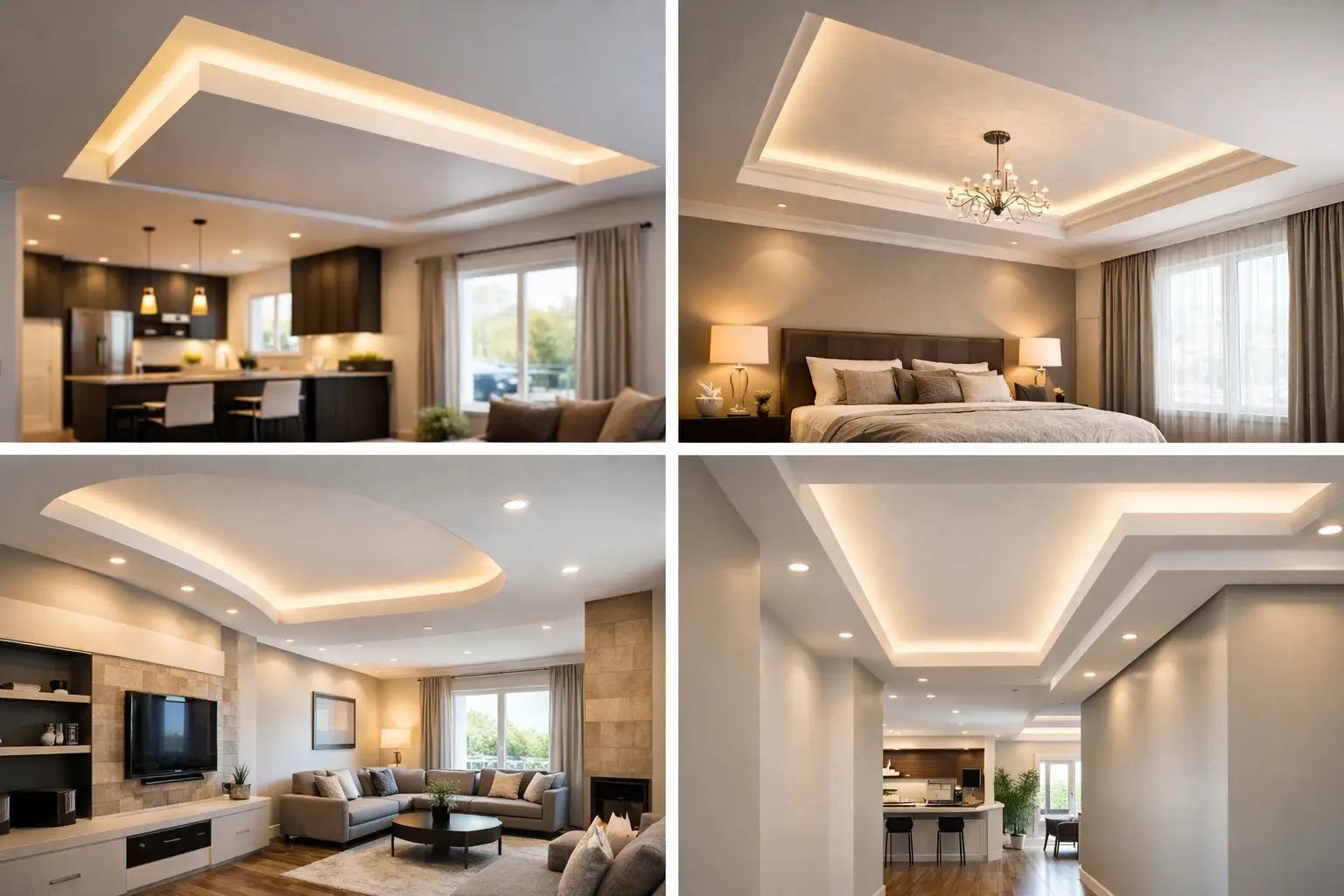
LED Cove Lighting Ceiling Ideas for Homes
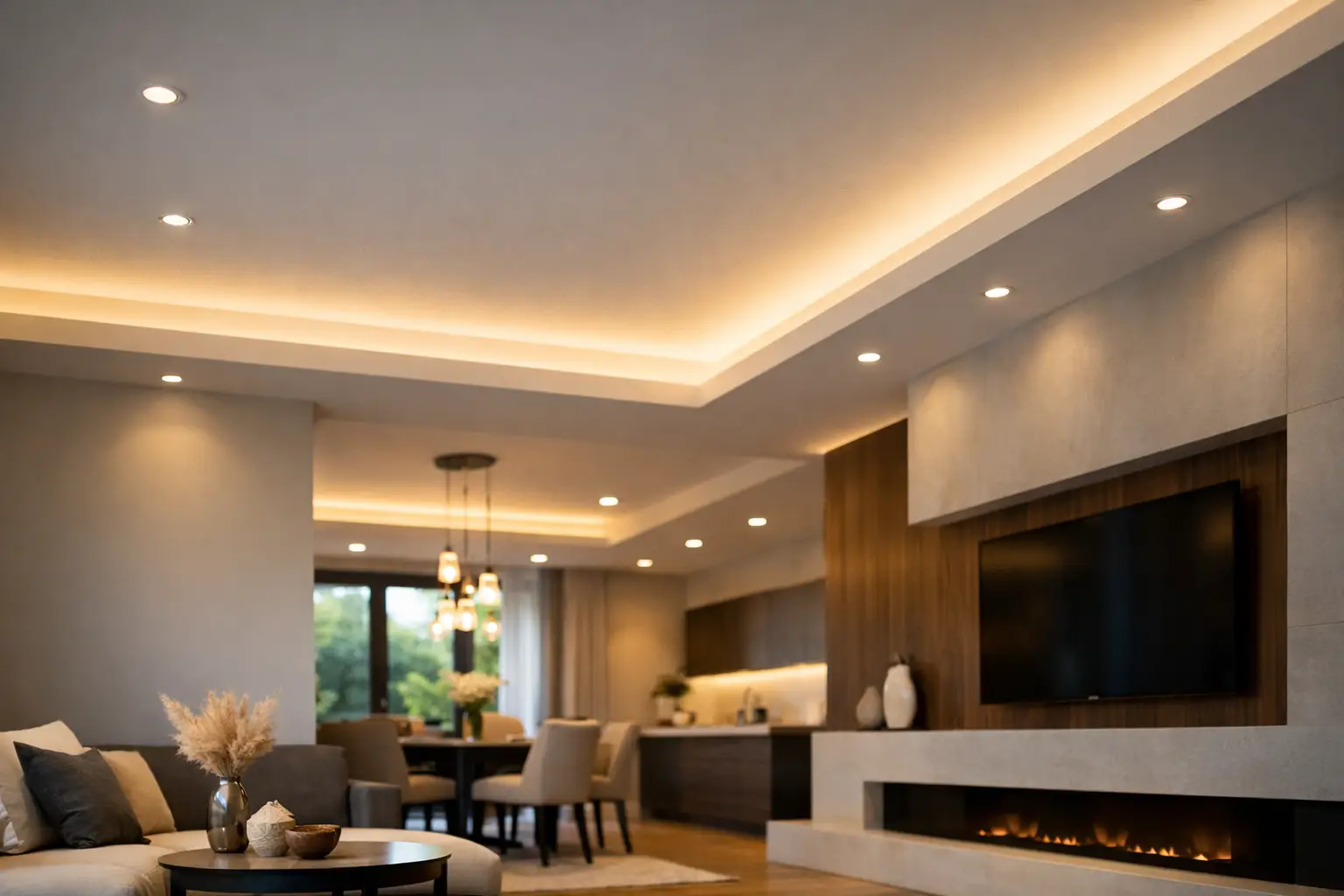
A well-built LED cove lighting ceiling can change a room faster than most people expect. Not because it shouts for attention, but because it softens the edges, lifts the ceiling line and makes the whole space feel more considered. When it is done properly, the light source stays hidden, the plaster lines stay crisp and the room feels calmer at night.
That last part matters. Homeowners often focus on the strip light itself, but the real result comes from the carpentry and plastering around it. If the cove is poorly set out, too shallow, wavy or patched roughly, no LED strip will save it. The finish is what people notice, even when they cannot quite explain why the room feels polished.
What makes an LED cove lighting ceiling work
At its simplest, a cove ceiling hides LED strip lighting inside a recessed ledge or bulkhead so the light washes across the ceiling or upper wall. The fitting is concealed, and what you see is the glow rather than the source. It is a clean look that suits modern renovations, but it can also sit comfortably in more traditional homes when the proportions are right.
The main appeal is mood and softness. Downlights give task lighting, but they can be harsh if they do all the work on their own. Cove lighting fills in the shadows. In living rooms, bedrooms and home theatres, that can make the space feel warmer and more expensive without adding visual clutter.
There is also a practical side. A cove detail can help define an open-plan room, tidy up awkward ceiling transitions or work neatly around bulkheads for air-conditioning, curtain recesses or dropped ceilings. In that sense, it is not just decorative. It can be part of a smarter ceiling layout overall.
Where LED cove lighting ceiling designs suit best
Some rooms benefit more than others. Bedrooms are an obvious choice because indirect light is easier on the eyes late at night. Living areas are another strong fit, especially where families want layered lighting instead of relying on a grid of bright downlights.
Kitchens can work too, but it depends on the layout. Cove lighting is excellent for ambience, though it should not replace task lighting over benches and work zones. Hallways and entry areas can also look sharp with a subtle ceiling glow, particularly in homes aiming for a more custom finish.
Bathrooms are possible, but moisture, access and material selection need extra care. In these spaces, build quality and electrical planning matter even more than usual.
It depends on ceiling height and room proportions
Not every room needs a cove. In low ceilings, an oversized drop can make the room feel compressed. In a very small room, too much perimeter detail can look busy. The right approach is usually restraint - enough depth to hide the light source and create a clean wash, without building a bulky feature for the sake of it.
This is where set-out becomes important. A feature that looks balanced in a large open-plan living area may feel heavy in a smaller bedroom. Good trades will adjust the dimensions to suit the room rather than copy the same profile everywhere.
The build matters as much as the lighting
This is the part many people discover too late. LED strip products get a lot of attention, but the lasting quality of an LED cove lighting ceiling comes from what sits underneath - framing, plasterboard lining, stopping, sanding and paint preparation.
A cove has to be straight, true and consistent. If the gap varies, corners wander, or the face line ripples in natural light, the whole feature looks second-rate. That is why this kind of work often suits a specialist who handles interior wall and ceiling details regularly, rather than treating it as a simple add-on.
The best results usually come from planning the cove and ceiling together. If you are already installing new plasterboard ceilings, bulkheads or repairing damaged areas, it makes sense to integrate the feature from the start. Retrofitting is still possible, but it can involve more patching, repainting and adjustment around existing cornices or ceiling levels.
Common build details that affect the finish
Depth, setback and viewing angle all influence how the light performs. If the LED strip sits too close to the edge, you may see the individual diodes or get a harsh hotspot instead of an even wash. If the recess is too deep, you can lose brightness and make future access awkward.
Corners need care as well. They should feel deliberate, not forced. Clean internal angles, straight runs and a smooth paint-ready surface are what separate a premium finish from something that always looks a bit unfinished.
Choosing the right light effect
Not all LED strips create the same result. Warm white is usually the safer choice in living spaces and bedrooms because it feels more relaxed and flattering. Cooler temperatures can suit some modern interiors, but they can also make the room feel clinical if overused.
Brightness should be balanced, not chased. A cove is usually there to support the room, not overpower it. If you want the feature to act as the main light source, the design has to allow for that with proper output, dimming and room-specific planning. Otherwise, it works best as part of a layered lighting scheme with downlights, pendants or lamps.
Dimming is worth considering early. Many homeowners like the idea of cove lighting because it changes the mood of a room, but that benefit is reduced if the lighting only has one intensity. A dimmable setup gives more flexibility from everyday use through to evenings and entertaining.
What homeowners often get wrong
The most common mistake is treating cove lighting as just an electrician’s job. Electrical work is essential, of course, but the visible result depends heavily on the ceiling construction and plaster finish. If the recess is not built neatly, the final look suffers.
Another mistake is making the feature too complicated. Too many levels, steps or lighting lines can clutter a ceiling quickly. Most homes look better with one clear idea executed properly. A simple perimeter cove or a clean dropped bulkhead with hidden lighting is often enough.
Access is another issue people forget. LED products last well, but drivers and components may still need servicing or replacement over time. A good design thinks about this upfront rather than sealing everything shut and hoping for the best.
Cost cutting in the wrong place can also backfire. Cheap strip lights might save money at the start, but poor colour consistency, weak adhesive backing or premature failure can turn a feature ceiling into a repair job. The same goes for rushed plastering. Once lighting hits an uneven surface, every flaw shows up.
Is it worth adding during a renovation?
If you are already opening ceilings, building bulkheads, lining walls or updating a key living space, this is often the right time. The extra labour and material cost tends to be more reasonable when the surrounding works are already happening. It also gives you more freedom to coordinate electrical layout, ceiling heights and paint finishing in one go.
For established homes, it can still be worthwhile as a standalone upgrade, especially in a main living area or master bedroom. The value is not only visual. It can make the space easier to live in by giving you softer lighting options at night.
In Perth homes, where open-plan living areas often carry a lot of the household traffic, a well-designed cove can help larger spaces feel calmer and more defined without adding heavy features.
How to judge whether the quote is realistic
Ask what is actually included. Some quotes cover only the basic frame and lining, while others include stopping, sanding, paint-ready preparation and coordination with the electrician. Fixed pricing is valuable here because feature ceilings can attract variation costs if the scope is vague.
It also helps to ask who will do the work. With detailed ceiling features, consistency matters. A boutique approach can be an advantage because the same person who measures and plans the job understands the finish expected on site. That accountability often shows in the final lines, not just the invoice.
If you are comparing prices, compare finish standards as well. A neat, straight, properly prepared cove takes time. The cheapest quote may not allow for the level of detail needed to get that clean floating-light effect people are actually chasing.
A good LED cove lighting ceiling should feel effortless once it is finished. That usually means there was nothing effortless about the planning, set-out and workmanship behind it. Get the structure right, keep the design proportionate, and the light will do exactly what it should - improve the room quietly, every single night.