Partition Wall Installation Done Properly
One new wall can change how a home works. A study becomes a nursery, an open area gains privacy, or a large bedroom is split to make better use of the floor plan. Good partition wall installation is not just about putting up studs and plasterboard. It is about getting the wall in the right place, making it feel original to the home, and leaving a finish that is ready for paint without headaches later.
For homeowners, landlords and renovators, that difference matters. A partition wall that looks straight on day one but cracks at the joints, feels hollow, or throws off cornices and flooring lines quickly becomes an expensive annoyance. A properly planned wall should feel like it always belonged there.
What partition wall installation actually involves
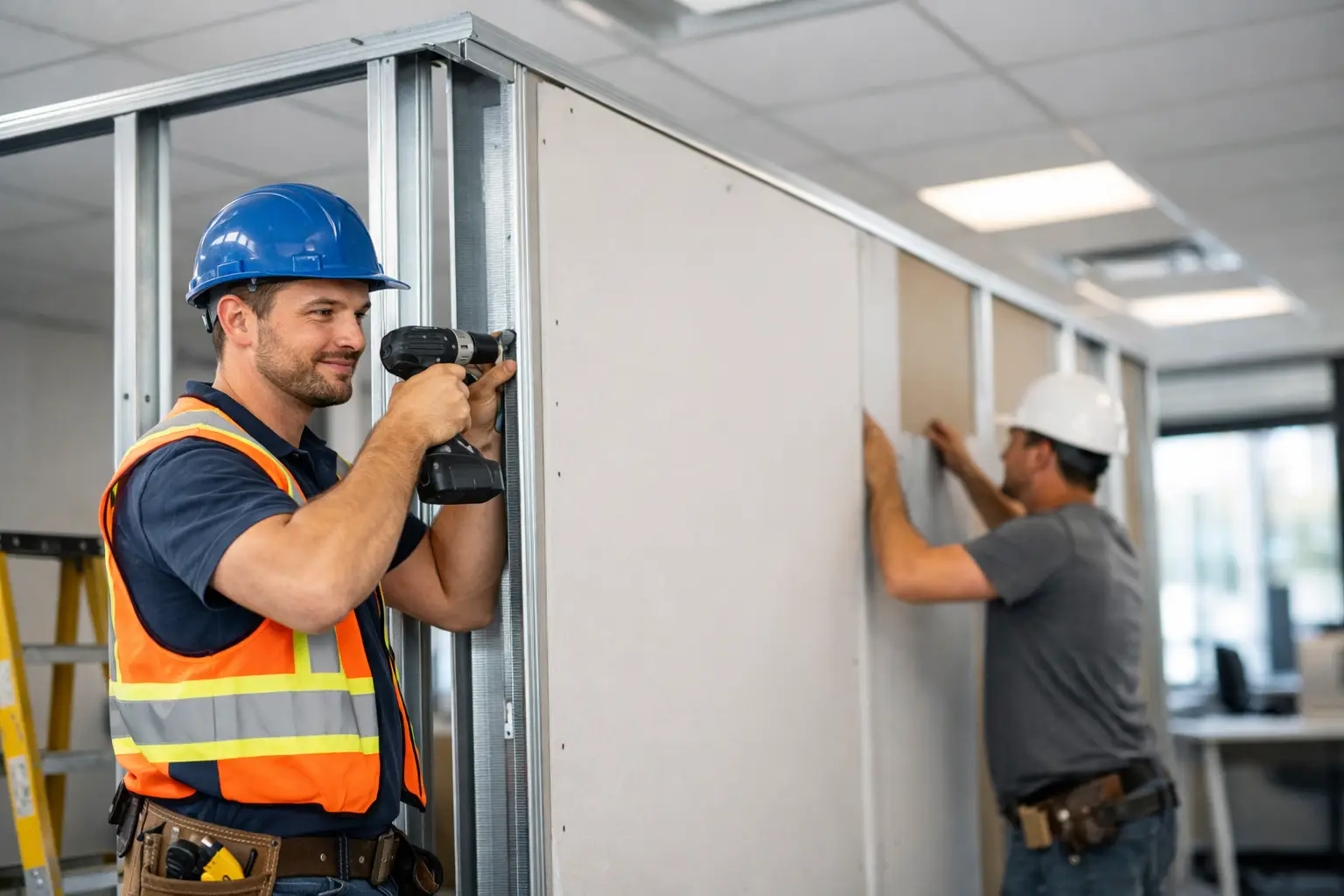
A partition wall is a non-load-bearing internal wall used to divide space. It can create a new room, screen off an area, improve privacy, or help define a layout more clearly. In most homes, the work involves setting out the wall position, building the frame, lining it with plasterboard, treating joints, and preparing the surface to a paint-ready standard.
That sounds simple enough, but the real work is in the details. Ceiling lines are not always perfectly straight. Floors can be slightly out of level. Existing cornices, skirtings and door openings all affect how the new wall should be built. If there are power points, lighting changes or air-conditioning considerations, those need to be planned before the wall is closed up.
This is where experience shows. A well-built partition wall should line up cleanly with the surrounding room, sit neatly against the ceiling, and carry the same level of finish as the rest of the house. It should not look like an obvious add-on.
When a new partition wall makes sense
Not every home improvement needs a major renovation. Sometimes the smartest change is simply to divide space better. Families often add partition walls to create a home office, separate a children’s bedroom, enclose a theatre room, or make an open-plan area more practical for day-to-day living.
For landlords, it can be a useful way to improve functionality without changing the whole property. For renovators, it helps shape a layout before investing in more costly joinery or finishes. In older homes, it can also be part of a more careful reworking of rooms where preserving character matters.
The key question is whether the wall will improve how the house is used, not just whether it can physically fit. A badly placed wall can make a room feel cramped, reduce natural light, or create awkward access. A well-considered wall improves privacy and function without making the home feel boxed in.
Why layout and finish matter as much as the frame
Many people think the hard part is the carpentry. In reality, the frame is only one part of the job. The visual finish is what people notice every day. If the plasterboard sheeting is uneven, the joints are poorly set, or the corners are not crisp, the wall will never look right under paint.
This is especially true in lived-in homes, where a new wall meets existing ceilings, cornices and wall linings. Any mismatch tends to stand out. If there is decorative cornice involved, or the home has older features, the work needs a more careful hand. Matching profiles and blending repairs can take more skill than the basic wall build itself.
That is why a boutique approach often suits this kind of work. When the same person measures, quotes and completes the job, there is less room for shortcuts or miscommunication. The planning reflects what is actually possible on site, and the finish is personally handled rather than passed down a chain of different trades.
Partition wall installation in occupied homes
Most homeowners are not building from scratch. They are living in the house while improvements happen around them. That changes how partition wall installation should be handled.
Dust control, floor protection and tidy staging matter. So does clear communication about what will happen first, what access is needed, and whether electrical rough-in or painting needs to be arranged around the wall build. A good trade does not just focus on the final wall. They also think about how to complete the work with minimal disruption.
There is also the question of timing. A straightforward partition wall may move quickly, but drying times for jointing compounds, coordination with sparkies if required, and the condition of the existing surfaces can all affect the schedule. Honest advice upfront is far better than promising a rushed finish that needs patching later.
What to ask before approving a quote
Not all quotes cover the same standard of finish. Some include only framing and sheeting. Others include joint setting, cornice work, patching around the new wall, and a proper paint-ready surface. If you are comparing prices, it helps to understand exactly what is included.
Ask whether the price is fixed, whether rubbish removal is included, and what happens if the existing ceiling or adjacent walls need extra preparation to achieve a clean result. It is also worth asking who will actually do the work. With some businesses, the person who sells the job is never seen again. With owner-operated specialists, there is more direct accountability and usually a clearer line of communication from start to finish.
Guarantees matter too, but only when backed by workmanship you can trust. Written commitments, tidy work practices and a clear scope of works are often a better sign than a vague low quote.
Common trade-offs homeowners should know
There is no one-size-fits-all answer with internal wall work. Some projects need acoustic insulation inside the wall for privacy. Others do not. Some walls need a door opening framed in from the start, while others are simply there to define a space. In some cases, extending the wall all the way to the ceiling is the right choice. In others, a partial divider or feature bulkhead may suit the room better.
Budget also affects the outcome, but not always in the way people expect. The cheapest option may save money on day one, yet cost more once cracks appear, corners get knocked because they were finished poorly, or painting highlights every imperfection. On the other hand, not every space needs a premium decorative treatment. The right approach depends on the room, the intended use and the standard of finish expected in the rest of the home.
That is why clear advice matters. Homeowners do not need a hard sell. They need someone who can explain what is necessary, what is optional, and where spending a bit more will genuinely improve the result.
Matching the wall to the rest of the house
The best internal wall work disappears into the home. That means the new partition should feel consistent with the existing rooms in height, line, texture and detail. If there is cornice, it should return neatly. If skirtings are being interrupted, they should be handled properly. If the surrounding walls are older and slightly imperfect, the new work needs to be blended with judgement rather than treated like a brand-new project in a blank shell.
This is often where finish quality separates a decent job from a professional one. Anyone can build a divider. Fewer can make it look natural in an established home.
For Perth homeowners, that can be especially relevant in houses that have settled over time or where previous renovations have left uneven surfaces. A wall that is measured only on paper may not suit the reality of the room. A proper on-site quote gives a much better basis for fixed pricing and a realistic finish standard.
Choosing the right person for partition wall installation
Internal wall work sits at the intersection of carpentry and plastering. If those skills are handled separately, small coordination issues can turn into visible finish problems. If they are handled together, the result is usually cleaner and more efficient.
That is one reason many homeowners prefer an owner-led specialist studio rather than a larger crew setup. With Yong's Carpentry, the hands that quote your job are the hands that finish it. That kind of direct accountability suits detail-focused work where alignment, surface quality and tidy completion all matter.
It also makes the process simpler. You are not repeating yourself to multiple people or wondering who is responsible if something needs adjustment. The communication stays direct, and the standard stays consistent.
A new wall should solve a problem, not create one. If the job is planned carefully, priced clearly and finished with pride, partition wall installation can be one of the most practical upgrades you make in a home. The best result is not just a straight wall. It is a room that works better, looks right, and feels settled from the moment the tools are packed away.