Shadowline Versus Cornice Ceilings Compared
A ceiling junction can make a room feel sharply contemporary or quietly traditional before any furniture moves in. When homeowners compare shadowline versus cornice ceilings, the decision is rarely just about appearance. It affects the plastering process, lighting options, repairability, budget and how forgiving the finished room will be as the house moves over time.
For renovations and new fit-outs alike, the right answer depends on the home, the room and the level of finish you expect. A well-executed detail should look intentional from the doorway and remain clean once it is painted, lit and lived with.
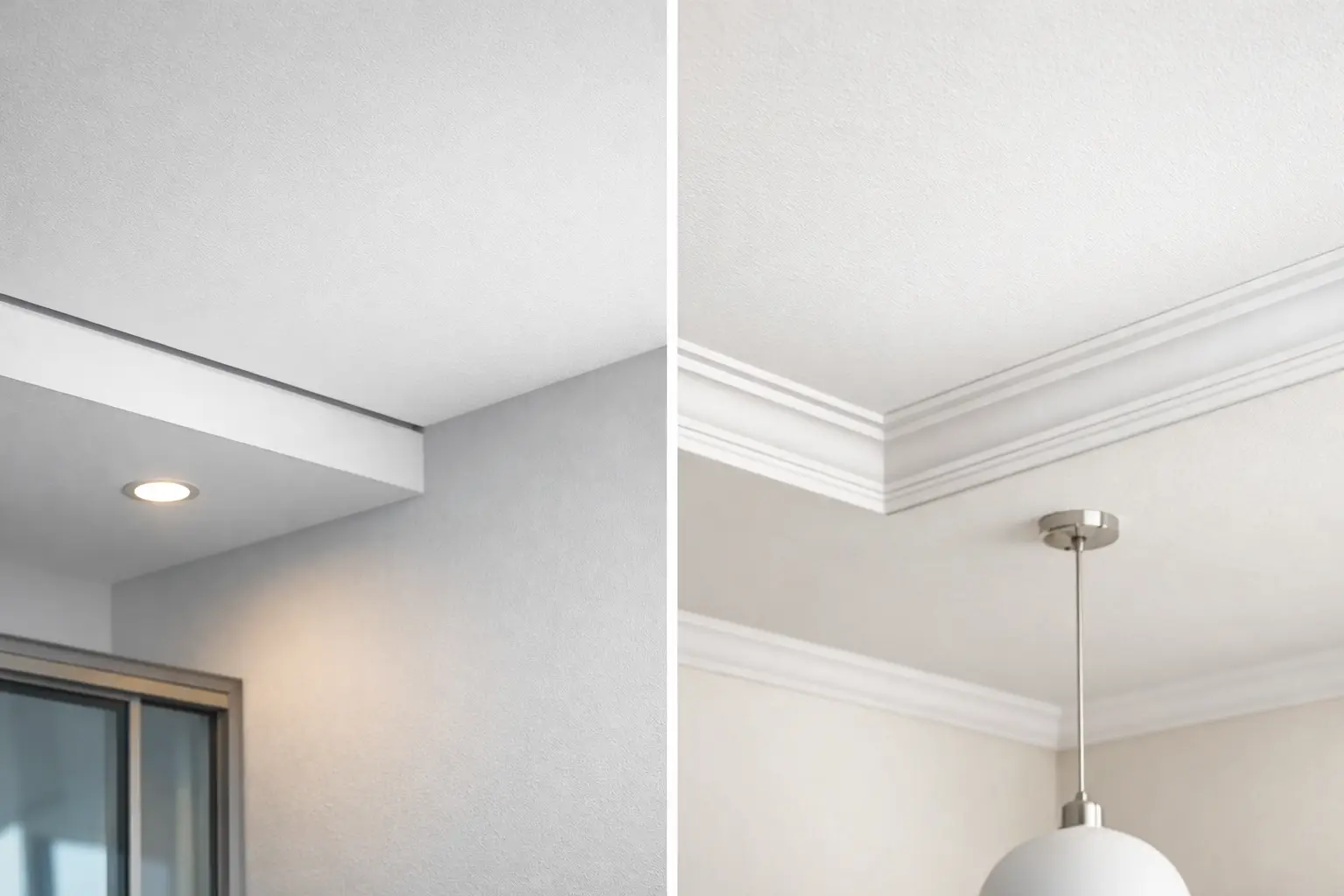
Shadowline versus cornice ceilings: the visual difference
A cornice is the moulded trim fitted where the wall meets the ceiling. It covers the joint between plasterboard sheets and creates a defined transition. Profiles range from simple cove cornices in newer homes to larger decorative styles used in character properties.
A shadowline ceiling takes the opposite approach. Instead of adding a visible moulding, the plasterboard is stopped short of the wall to create a narrow recessed gap. This fine negative line makes the ceiling appear to float slightly above the wall. The result is crisp, minimal and particularly suited to contemporary interiors.
Neither detail is automatically better. Cornice gives a room softness, depth and a sense of finish. Shadowline creates cleaner planes and lets strong wall colours, feature finishes and architectural lighting take more of the attention. The quality of installation matters more than the trend. A poorly set shadowline can look uneven and draw the eye immediately, while rough cornice joins can spoil an otherwise freshly painted room.
When a shadowline ceiling is the right choice
Shadowline details work best where the architecture is simple and deliberate. They suit modern renovations, extensions, apartments and homes with square-set openings, flush doors or concealed lighting. They can also make a standard-height room feel less crowded because there is no moulding projecting into the space.
The line needs to be consistent around the room. That means careful framing checks before plasterboard goes up, accurate setting-out and clean stopping work at every internal corner. Walls that are noticeably out of plumb, ceilings that dip, or old junctions that have moved can make this more challenging. An experienced plastering specialist can assess whether the existing structure will support a crisp result or whether preparation is needed first.
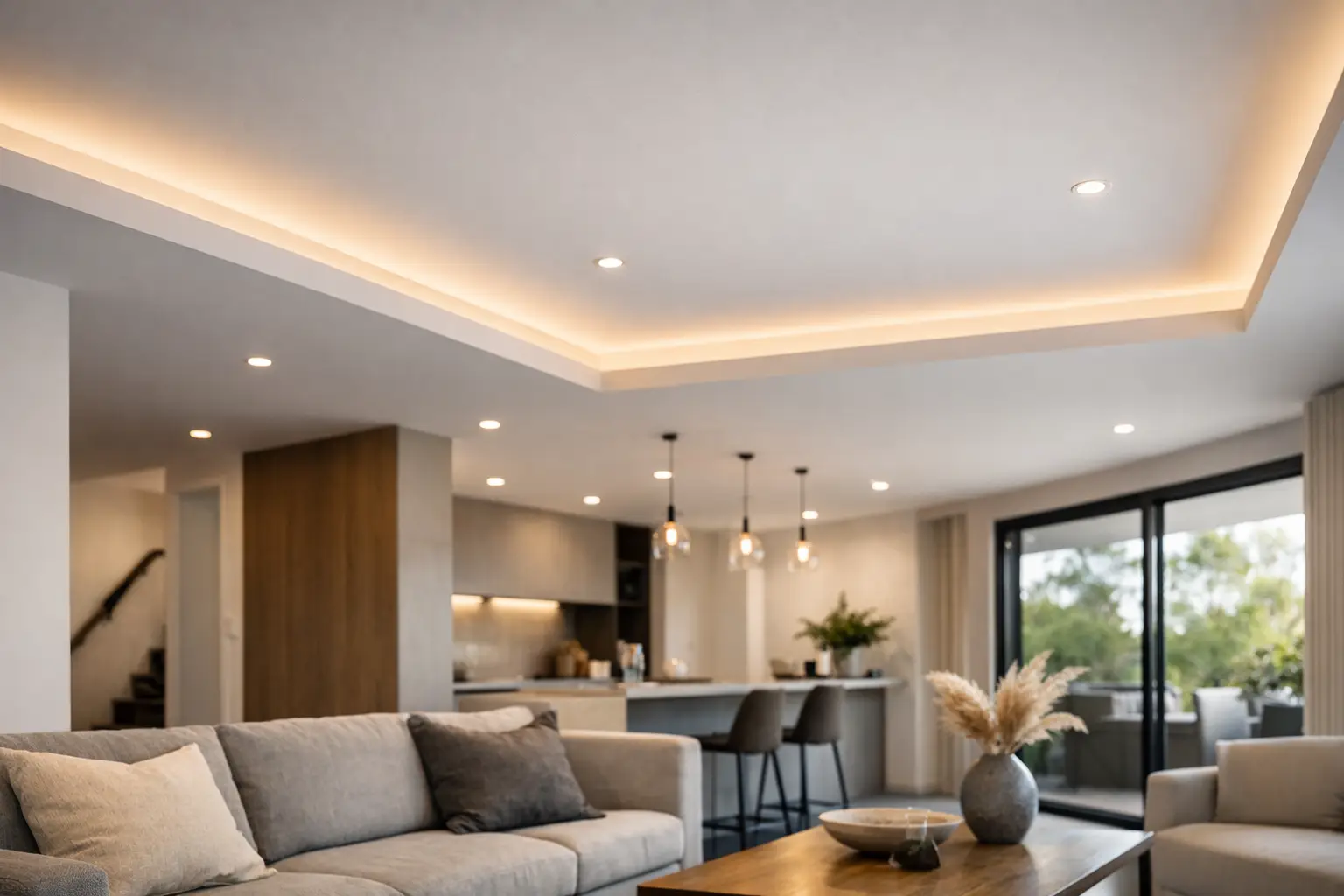
Shadowline is especially effective near recessed LED lighting coves, bulkheads and feature walls. The detail allows those elements to feel connected rather than layered on. It is not always the best option for a room where decorative cornices already appear throughout the rest of the home, unless the renovation is intentionally creating a new, contemporary zone.
The practical trade-offs with shadowline
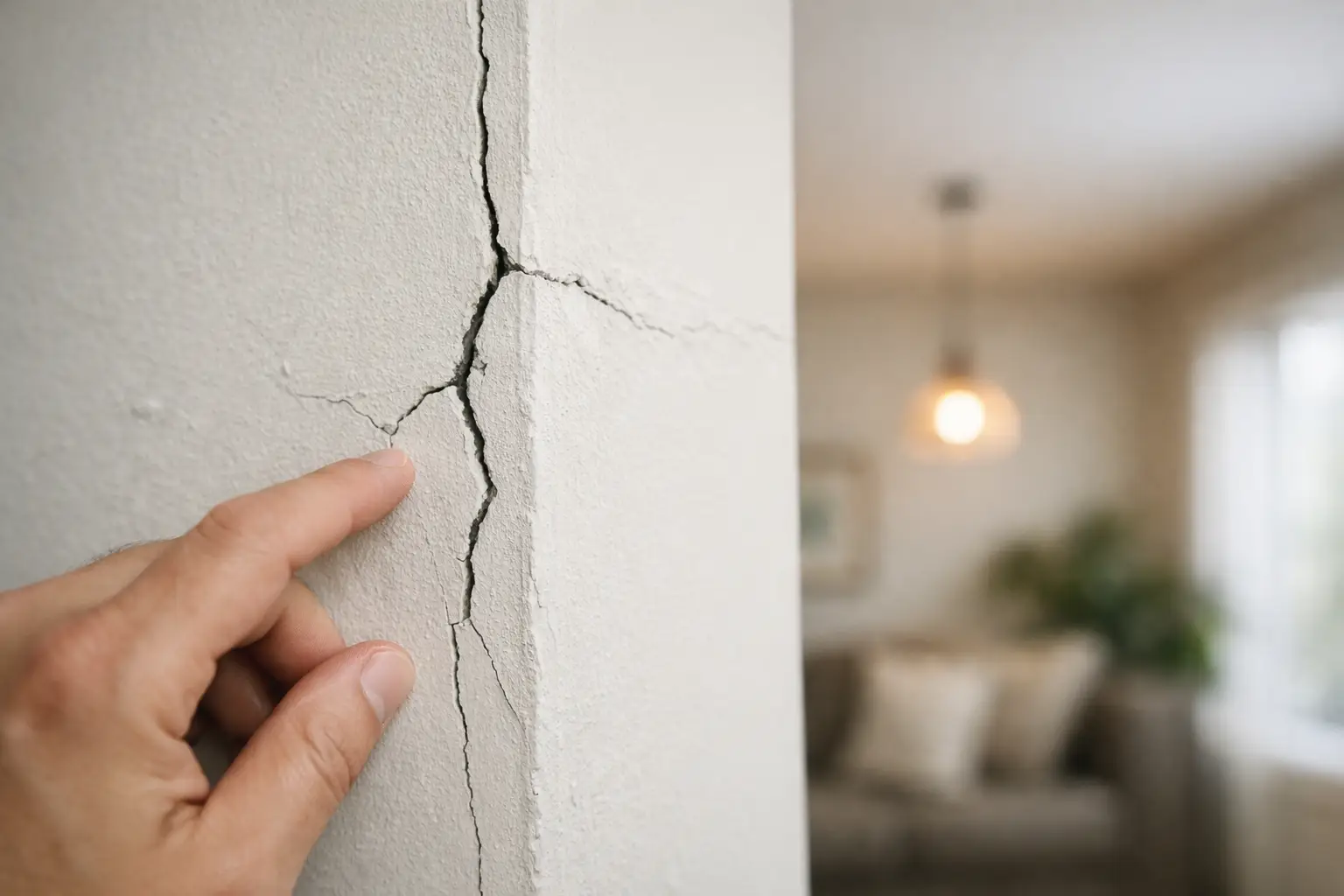
The clean look is less forgiving of movement and poor preparation. Perth homes can experience minor seasonal movement, and older properties may already have cracks around wall and ceiling junctions. A shadowline will not hide those issues in the way a cornice can.
It also requires more precision during later work. If painters overfill the recess, caulk the line inconsistently or leave paint build-up in the gap, the floating effect is lost. The same applies when new cabinetry, curtain tracks or wall-mounted services meet the ceiling. Planning these details early avoids awkward cut-ins later.
For a new ceiling installation, shadowline may involve additional labour compared with fitting a basic cornice, particularly where there are multiple corners, bulkheads or uneven existing walls. It is an investment in a very precise finish, not simply a way to leave trim off.
When cornice is the better fit
Cornice remains a practical and attractive choice for many Perth homes. In bedrooms, hallways, family rooms and rental properties, a simple profile creates a finished edge that is familiar, durable and easy to maintain. It is also highly adaptable. A small cove profile can suit a straightforward modern room, while a larger stepped or decorative profile can restore period character.
Most importantly, cornice helps manage the realities of plasterboard construction. It covers the wall-to-ceiling joint and provides a little visual tolerance where surfaces are not perfectly straight. That does not mean workmanship can be casual. Cornice still needs straight runs, tight mitres, well-filled joints and a smooth paint-ready surface. But the profile is more forgiving than a thin shadow gap.
For homes with original decorative features, matching or repairing cornice is often the most sympathetic option. Replacing heritage-style cornice with a shadowline can make a room feel disconnected from the rest of the house. In these cases, profile matching and careful blending are usually more valuable than following a minimalist trend.
Cornice and future repairs
Cornice can make certain ceiling repairs simpler. If water damage, cracking or sagging affects a section of ceiling, removing and replacing local cornice may provide clean access for new plasterboard and setting work. Once repaired and painted, the join can be made difficult to detect.
That said, decorative profiles require skilled handling. A replacement section must match the original size and shape, and joins need to be finished carefully so they do not telegraph through the paint. If water has affected the ceiling, the source of the leak must be fixed before any plaster repair begins. A tidy cosmetic patch will not last if moisture remains in the structure.
Cost, maintenance and long-term value
There is no single price winner in the shadowline versus cornice ceilings decision. A basic cornice profile is generally economical to supply and install, especially in a straightforward room. Decorative cornice, high ceilings, curved walls and heritage matching can increase the labour involved.
Shadowline costs depend heavily on the condition of the walls and ceiling, the room geometry and whether it is being formed as part of a new installation or retrofitted into an existing space. Long, open walls show every inconsistency. Extra preparation to straighten surfaces or rebuild damaged edges can be necessary to achieve the fine line clients expect.
Maintenance is simple for both when properly painted. Cornice can collect a little dust on its upper ledge, especially with ornate profiles. Shadowline can gather dust in the recess, although a soft brush attachment during routine cleaning is usually enough. Neither should crack prematurely in a sound, stable home, but no plaster detail can prevent movement caused by structural issues, truss uplift or moisture damage.
The best long-term value comes from choosing a detail that belongs in the home. A clean shadowline may add strong appeal to a contemporary renovation. Well-matched cornice can protect the character and resale appeal of an older property. Trying to force either style into the wrong setting can look dated faster than a well-considered, simpler finish.
Questions to settle before work starts
Before committing to either option, look at the adjoining rooms rather than viewing the ceiling in isolation. Consider whether the home has decorative ceiling roses, picture rails, older timber joinery or existing cornice that should be continued. Also think about planned lighting, curtains, cabinetry and bulkheads, because these details often meet at the ceiling line.
Ask how the installer will handle corners, uneven walls, existing cracks and paint preparation. A fixed-price quote should clearly identify the scope, including demolition where required, new plasterboard, cornice or shadowline finishing, setting and the level of surface preparation. That clarity matters most in lived-in homes, where furniture protection, dust control and a tidy work area are part of a professional result.
At Yong's Carpentry, the hands that quote your job are the hands that finish it. That direct accountability helps ensure the chosen ceiling detail is planned around the actual condition of your home, not treated as a one-size-fits-all inclusion.
A ceiling edge may be a small detail on a floor plan, but it sits in view every day. Choose the line that suits your home's architecture, allow for proper preparation, and insist on a finish that still looks straight and deliberate once the paint is dry.