Why Do Wall Joints Keep Cracking in Your Home?
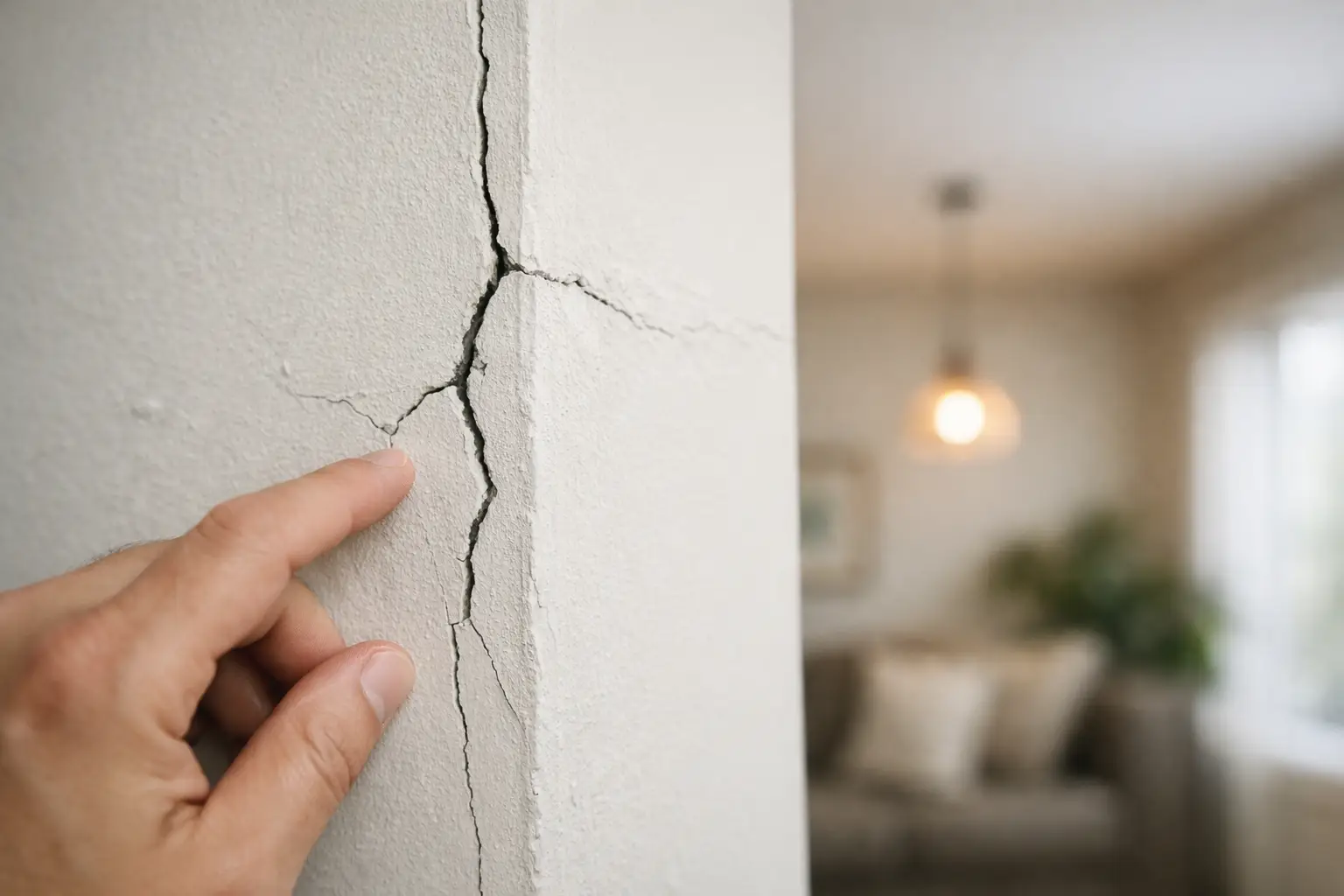
A crack reopening along the same wall joint is frustrating because it makes a fresh paint job look unfinished within months. If you are asking, “why do wall joints keep cracking?”, the short answer is that the joint is moving, or the original repair did not allow for the movement that is already there.
Most wall-joint cracks are not a sign that the house is about to fail. Many are caused by normal building movement, changes in temperature and moisture, or a weak plasterboard joint repair. But a recurring crack should not simply be filled and painted again. The pattern, location and width of the crack tell you what needs attention first.
Why do wall joints keep cracking after repair?
A plasterboard wall is built from separate sheets. The joins between those sheets are covered with jointing tape and compound, then sanded to create one smooth surface. When the framing, plasterboard or surrounding structure moves, the join is usually the first place to show it.
A quality repair needs more than a skim of topping compound over the visible line. The damaged section must be assessed, prepared properly, retaped where needed and built up in controlled coats. If the underlying cause is ignored, even a very neat-looking patch can crack again.
Normal house movement
Homes settle and move over time. Timber framing expands and contracts, roof trusses respond to heat, and minor seasonal changes affect materials differently. Perth’s hot, dry periods can make this movement more noticeable, particularly in newer homes as materials settle into place.
Fine, straight cracks at plasterboard joints are often cosmetic movement. They may open slightly in one season and become less obvious in another. That does not mean the repair should be rushed. A flexible, well-prepared joint detail gives the finish the best chance of staying smooth.
Poor original jointing
Many recurring cracks come back to the installation itself. The tape may not have been properly embedded, there may be too little compound beneath it, or the joint may have been sanded too aggressively. In some cases, paper tape has lifted from the board and the crack follows its edge.
Fasteners also matter. If plasterboard screws have missed the timber framing, sit proud, or have not held the sheet firmly, the board can move independently. You may see a crack near the join along with small circular screw pops. Covering these signs without securing the board first is only a temporary cosmetic fix.
Movement between different materials
Cracks often appear where plasterboard meets another material: brickwork, concrete, timber beams, steel lintels, window frames or a bulkhead. These materials expand, contract and flex at different rates. A rigid plaster finish across that junction can split as the house moves.
This is common around door openings, windows, stair voids and extensions. It can also happen where a new partition wall meets an older ceiling or masonry wall. The right solution may involve a controlled joint or flexible sealant detail rather than trying to make two moving surfaces behave as one.
Roof or ceiling movement
A wall crack near the ceiling line can be connected to the roof structure rather than the wall itself. Roof trusses can lift slightly in changing conditions, especially where ceiling framing and internal partitions are fixed in ways that restrict natural movement. The result may be a horizontal crack at the top of an internal wall, often more visible in bedrooms or hallways.
This type of cracking needs a considered repair method. Simply bonding the wall and ceiling tightly together again can repeat the problem. The finish detail needs to accommodate the movement while still looking clean and paint-ready.
Water damage and moisture
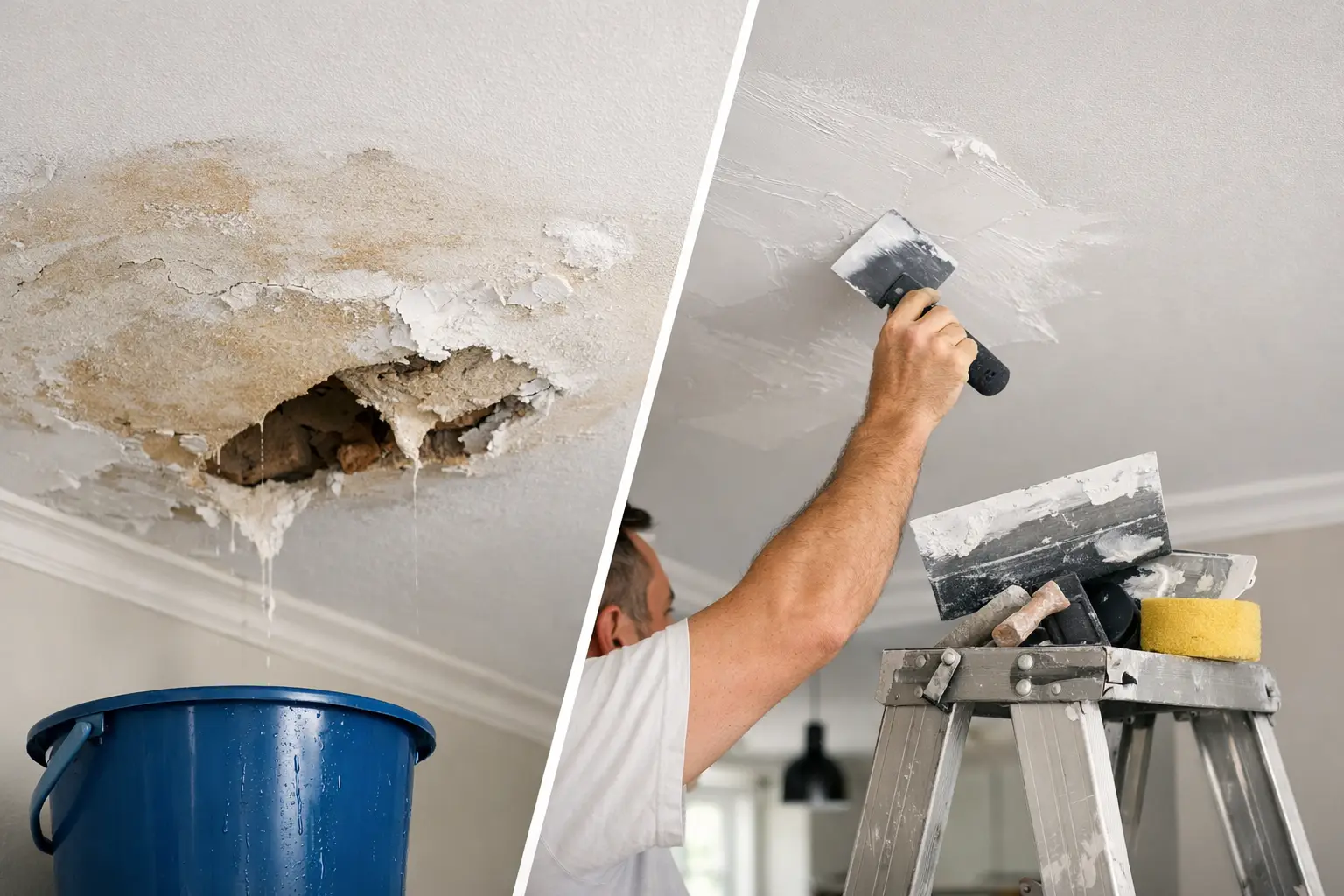
Water is one of the most common reasons a previously sound joint suddenly fails. A leaking roof, flashing issue, plumbing leak, overflowing gutter or bathroom moisture problem can soften plasterboard and break down the bond holding tape and compound in place.
Look for staining, bubbling paint, a soft surface, sagging, mould or a musty smell. The water source must be repaired and the area fully dried before new plasterboard work begins. Repairing the visible crack while moisture remains behind the wall is money spent twice.
When is a cracked wall joint more than cosmetic?
Most hairline joint cracks are repairable without major building work. Still, certain signs deserve a closer look before plastering begins. A crack that is widening, running diagonally from a door or window corner, or appearing alongside sticking doors and windows may point to more significant movement.
Pay attention if the crack is wider than a few millimetres, has appeared suddenly, continues through brickwork or external render, or is accompanied by a sloping floor, gaps at skirting boards, or obvious separation around frames. In these cases, a building or structural assessment may be sensible before arranging cosmetic repairs.
The same applies after a major water event. Once the leak is contained, damaged materials may need to be removed rather than patched over. A proper inspection prevents hidden deterioration from affecting a new finish.
What a lasting wall joint repair involves
The best repair starts with identifying whether the crack is in the joint itself, the surrounding plasterboard, the corner bead, or the junction between two materials. That diagnosis determines the method. There is no single filler that suits every crack.
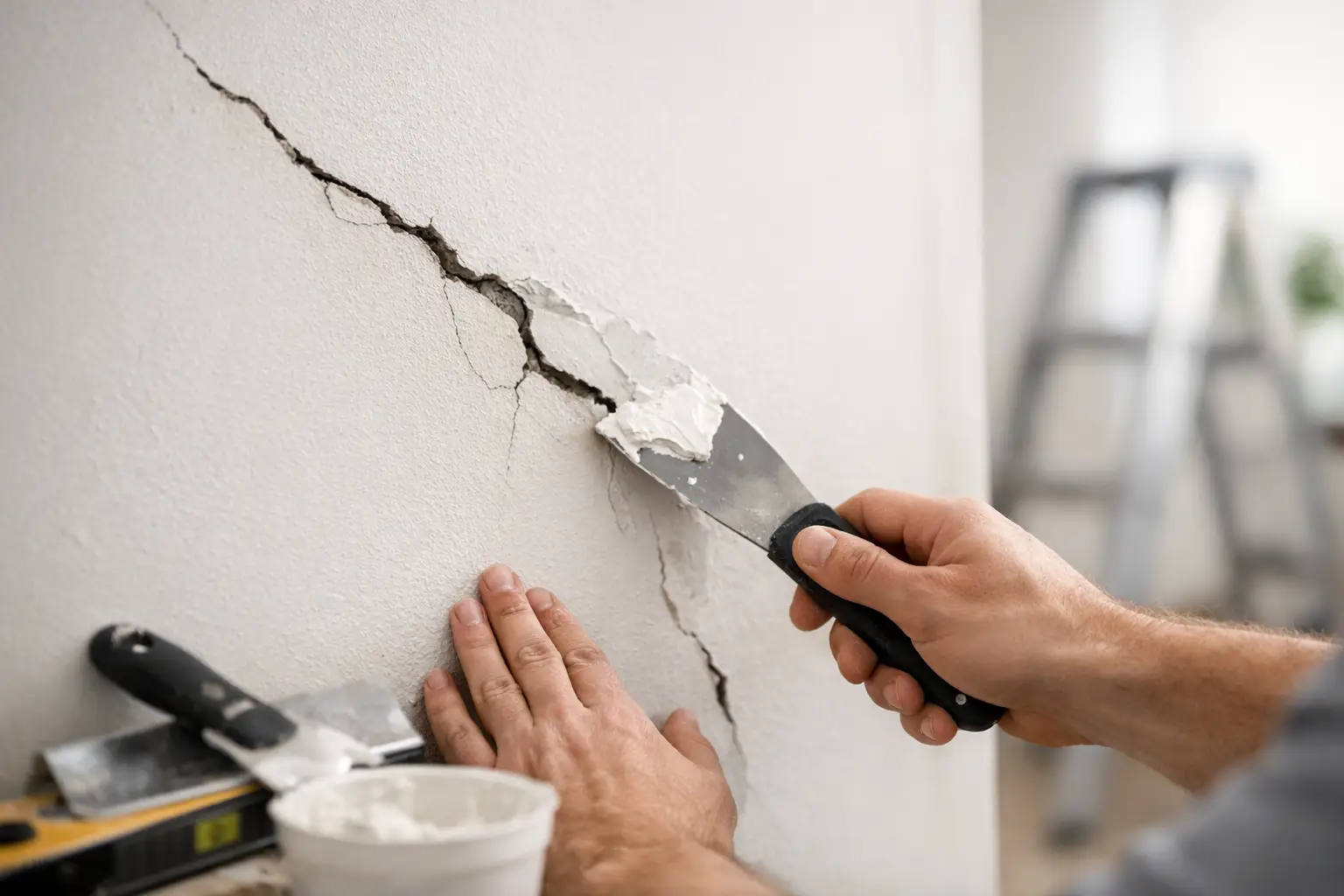
For a failed plasterboard joint, the loose compound and tape are removed back to sound material. The boards are checked and re-secured where necessary. New tape is bedded into compound, then built up in several coats with adequate drying time between each one. Each coat is feathered wider than the last so the repaired area disappears into the wall rather than leaving a visible ridge under paint.
Corners, ceiling junctions and dissimilar materials may need a different approach. The goal is not to make movement vanish. It is to create a tidy, durable detail that manages likely movement without repeatedly splitting the finished surface.
Sanding is the final detail homeowners often notice. A repair may be structurally sound but still look poor under afternoon light if it has not been blended carefully. A professional finish is checked from different angles, leaving the surface ready for primer and paint rather than merely covered over.
Can you fix a recurring crack yourself?
A very fine, stable hairline crack can sometimes be touched up as a short-term solution. Clean away loose material, use a suitable filler, sand lightly and repaint the full section where possible to avoid a patchy sheen. However, this is unlikely to hold if the tape has failed or the wall lining is moving.
Avoid applying heavy layers of filler directly over an open joint. Thick filler can shrink, crack at the edges and create a hump that catches the light. Likewise, do not paint over a water stain until the moisture source has been resolved.
For repeated cracking, high ceilings, decorative cornices, water damage or a feature wall where the finish matters, a specialist repair is usually better value. The work is in the preparation, not just the final coat of paint.
Questions to ask before booking a repair
A clear quote should explain what is being repaired and what is excluded. Ask whether loose tape will be removed, whether the plasterboard will be checked for movement, how the repair will be finished for painting, and whether the likely cause has been considered.
It is also worth asking who will complete the work. With an owner-operated specialist such as Yong’s Carpentry, the hands that quote your job are the hands that finish it. That direct accountability makes it easier to discuss the crack, the repair method and the level of finish you expect before work starts.
Take a photo when the crack first appears, then check whether it changes over several weeks. That small record can help distinguish a one-off cosmetic issue from ongoing movement - and gives the person repairing it a much clearer starting point.