Water Damaged Ceiling Repair in Perth
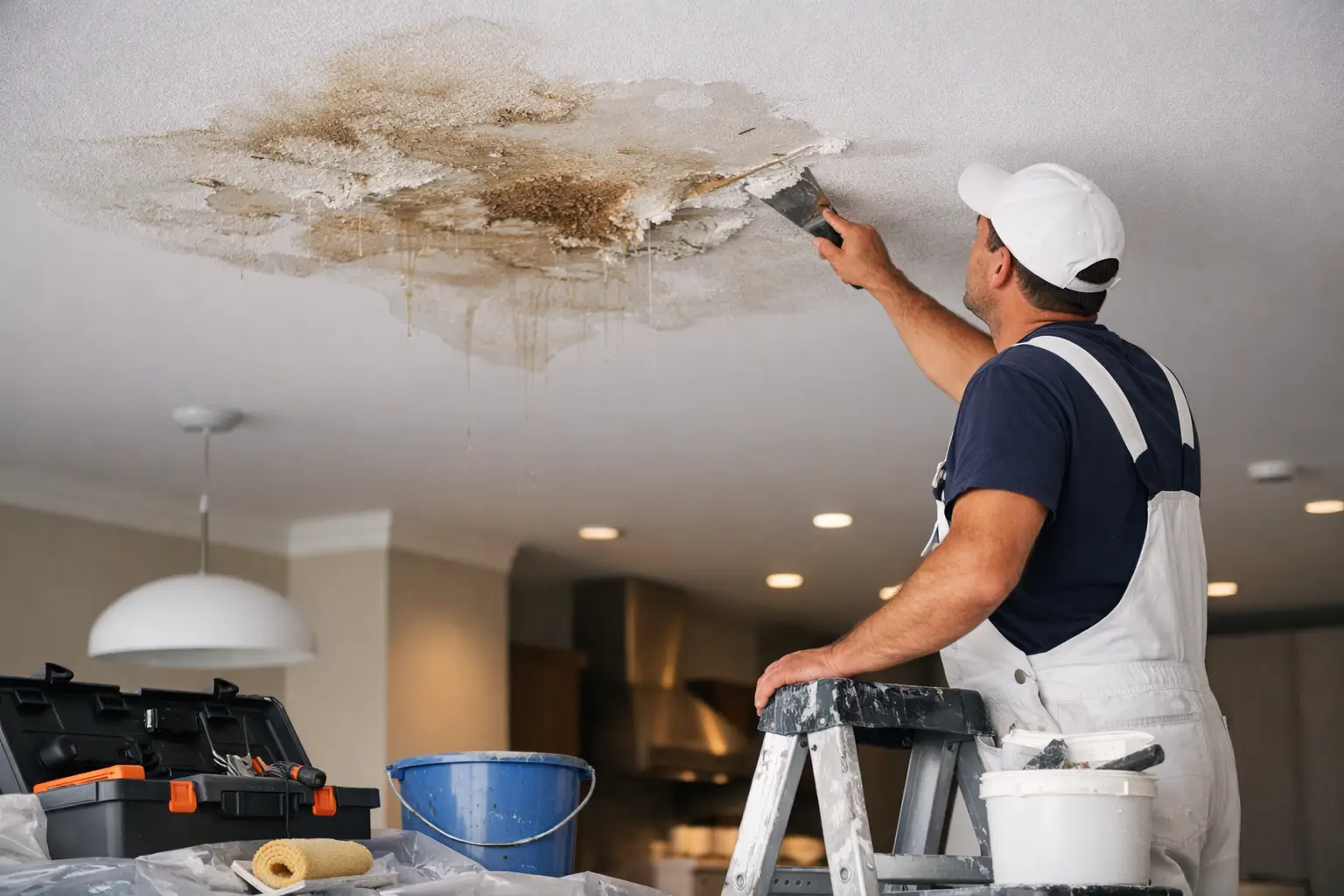
A ceiling stain is easy to ignore for a week or two. A sagging ceiling is not. Once water gets into plasterboard, the problem can move quickly from a cosmetic mark to a safety issue, especially in older Perth homes where previous repairs, roof leaks or cracked wet areas have already weakened the lining.
Water damaged ceiling repair is rarely just a matter of patching the visible mark and repainting. The real job is working out where the moisture came from, how far it has travelled, whether the plasterboard has lost strength, and how to restore the surface so it looks right again once painted. If that first step is skipped, the stain often comes back and the ceiling can continue to soften behind the scenes.
What actually causes ceiling water damage?
In Perth homes, the most common causes are roof leaks, failed flashing, blocked gutters, burst pipes in the roof space, air-conditioning overflows, and bathroom leaks from the floor above. Sometimes the damage appears well away from the actual source. Water can track along timbers, insulation or services before it settles in one low point and shows up as bubbling paint or a brown stain.
That is why the location of the mark does not always tell the full story. A neat circular stain in the lounge may have started near a valley gutter. A damaged patch outside a bathroom may be caused by failed waterproofing or a slow plumbing leak. The visible ceiling issue is the symptom. The moisture source is the real fault.
When water damaged ceiling repair is possible
Not every wet ceiling needs to be fully replaced. In some cases, repair is the right option - but only if the board has dried properly and is still structurally sound.
If the water exposure was limited, the plasterboard has not sagged, and the paper face is intact, a localised repair may be enough. That usually involves removing loose material, treating affected joints, replacing damaged sections where needed, setting the surface flush, and preparing it for primer and paint. The aim is not just to cover the damage, but to make the repair disappear into the surrounding ceiling.
This is where experience matters. Ceiling repairs are unforgiving because light travels across the surface and highlights every hump, hollow and patch line. A repair that looks acceptable in low light can stand out badly in daylight or under downlights.
When replacement is the better call
There are times when repairing a water damaged ceiling is false economy. If the plasterboard is swollen, sagging, crumbling at the joints, or mould-affected over a larger area, replacement is usually the safer and cleaner result.
A section replacement may also make more sense where the damage sits across several joints or where older repairs have already left the ceiling uneven. In those cases, chasing multiple weak spots can cost more in labour and still leave a compromised finish. Replacing the affected section gives a sound substrate and a more reliable long-term result.
For homeowners, the key trade-off is simple. A smaller repair can save money if the substrate is still good. But if the board has lost strength, replacement is often the smarter fixed-price decision because it reduces the chance of recurring issues and gives a cleaner paint-ready finish.
Signs your ceiling should be checked quickly
Some ceiling water damage is mostly visual at first. Some is urgent. If you notice sagging, bubbling paint, splitting joints, soft plasterboard, mould spotting, or water actively dripping, it is worth having it assessed sooner rather than later.
A ceiling that bows or feels soft can become unsafe. Wet plasterboard gets heavy. If insulation is also holding moisture above it, the load increases further. In severe cases, parts of the ceiling can collapse without much warning.
Even where the ceiling still feels firm, repeated staining usually means the leak source has not been properly resolved. Repainting over it may hide the mark for a while, but it will not stop ongoing damage.
The right order for water damaged ceiling repair
Good repair work starts before any plastering tools come out. First, the leak must be identified and dealt with. There is little value repairing a ceiling if the roof, plumbing or wet-area issue is still active.
Next comes inspection of the damaged area. This includes checking how far the moisture spread, whether the board has dried, and whether nearby joints, cornices or insulation have been affected. The repair scope should match the actual condition, not just the visible stain.
Only then does the ceiling work begin. Depending on the damage, that may involve cutting out affected board, replacing sections, re-taping joints, matching set levels, sanding for a smooth finish, and preparing the area for painting. In older homes, it can also include matching existing cornice lines or blending the repair into ceilings with minor age movement and previous patching.
That order matters because it prevents the most common mistake in this type of work - treating a moisture problem as a paint problem.
Why invisible ceiling repairs are harder than they look
Homeowners often assume the difficult part is stopping the leak. That is certainly one part of it, but the finish matters just as much inside the home. A poor repair tends to show up every day.
Ceilings need a flat, consistent plane. Any mismatch in board thickness, setting level, sanding, or texture can catch light and become obvious. This is especially true in open-plan living spaces, hallways and rooms with recessed LED lighting, where shadows exaggerate surface variation.
An owner-operated specialist brings a different level of control here. The hands that quote your job are the hands that finish it, which means the person assessing the damage also carries responsibility for the final line, level and finish. That tends to produce better decisions on whether to repair, replace, or extend the scope slightly for a cleaner result.
What homeowners in Perth should ask before booking
Price matters, but this kind of work is not just about getting a number. It is worth asking whether the quote includes removal of damaged material, protection of the home, section replacement if required, joint setting, sanding, and a paint-ready finish. Clear inclusions make it easier to compare like for like.
It also helps to ask who will actually do the work. In a larger crew-based setup, the person who inspected the ceiling may not be the person carrying out the repair. That can create gaps between what was promised and what is delivered. With a boutique approach, there is more direct accountability and usually smoother communication from inspection through to completion.
Tidiness should not be overlooked either. Ceiling repair creates dust, and water damage can leave fragile material overhead. A careful operator will protect floors and furnishings, keep the work area orderly, and leave the home in good condition once the job is done.
Water stains, mould and repainting
Once the ceiling substrate is properly repaired, the final appearance depends on preparation. Water staining can bleed back through paint if the surface is not sealed correctly. Mould, where present, needs to be addressed appropriately and not simply covered.
This is another area where shortcuts cost more later. A ceiling may look fine immediately after painting, then show patch outlines or stain bleed a few months on. Proper preparation gives the paint the best chance of lasting and keeps the repair visually consistent with the rest of the room.
Choosing a repair approach that suits the home
Every house is a little different. A newer home with one isolated leak may need a straightforward section repair. An older property with movement, decorative cornice or previous patching may need a more considered approach to get a neat result. Rental properties also have their own priorities - safety, durability and a presentable finish without drawn-out disruption.
That is why honest quoting matters. Sometimes the better answer is a modest localised repair. Sometimes it is a larger replacement area to avoid patchwork results. A dependable tradesperson should explain the difference clearly, offer fixed pricing, and recommend the option that makes sense for the condition of the ceiling rather than the quickest sale.
At Yong's Carpentry, that practical approach is central to the work: direct advice, tidy workmanship, and repairs personally handled from quote to completion.
If your ceiling has started to stain, bubble or sag, the best time to deal with it is before the damage spreads. A careful inspection now usually saves a more disruptive repair later, and gives you a better chance of ending up with a ceiling that looks as though nothing ever happened.