When Does a Ceiling Need Replacing?
A ceiling can look "not too bad" right up until the day a crack opens wider, a sag gets worse or old water damage starts showing through fresh paint again. That is usually when homeowners ask the real question: when does a ceiling need replacing, rather than just repairing?
The honest answer is that it depends on the cause, the age of the ceiling and how far the damage has spread. Some ceilings are good candidates for a clean, invisible repair. Others are already telling you that patching will be temporary, messy or poor value. Knowing the difference matters, especially if you want a safe result and a paint-ready finish that actually lasts.
When does a ceiling need replacing instead of repairing?
A localised crack, a small hole or a single damaged section after a minor leak can often be repaired. If the plasterboard is still sound, the framing is stable and the rest of the ceiling is in reasonable condition, a skilled repair can blend in well.
Replacement becomes the better option when the problem is no longer isolated. If you have widespread sagging, recurring cracks, multiple previous patches, heavy water damage or signs that fixings have failed across a larger area, repair starts becoming a short-term solution. In those cases, replacing the affected ceiling section, or sometimes the whole room ceiling, is often safer and more cost-effective.
This is where experience matters. A tidy repairer should not push replacement if a proper repair will do. At the same time, a dependable tradesperson should also be clear when patching is just delaying a bigger problem.
The signs a ceiling is beyond a simple patch-up
Sagging or dropping sheets
A ceiling should sit flat and firm. If it is bowing, dipping between joists or visibly dropping at the joints, that is a warning sign. Sagging can happen due to age, moisture, poor original installation or failed adhesive and fasteners.
This is not just a cosmetic issue. In more severe cases, sections can let go without much warning. If the ceiling feels soft, looks uneven across a broad area or you can see nail pops and movement along the sheet lines, replacement is usually the safer call.
Repeated cracking in the same spots
One hairline crack is not always a major problem. Houses move a little over time, especially with seasonal changes. But if the same cracks keep reopening after patching and painting, there is usually a deeper issue.
That could be movement in the framing, joint failure, inadequate fixing or deterioration in older plasterboard. Once cracking becomes a pattern instead of a one-off defect, ongoing repairs can become false economy.
Water damage that has weakened the board
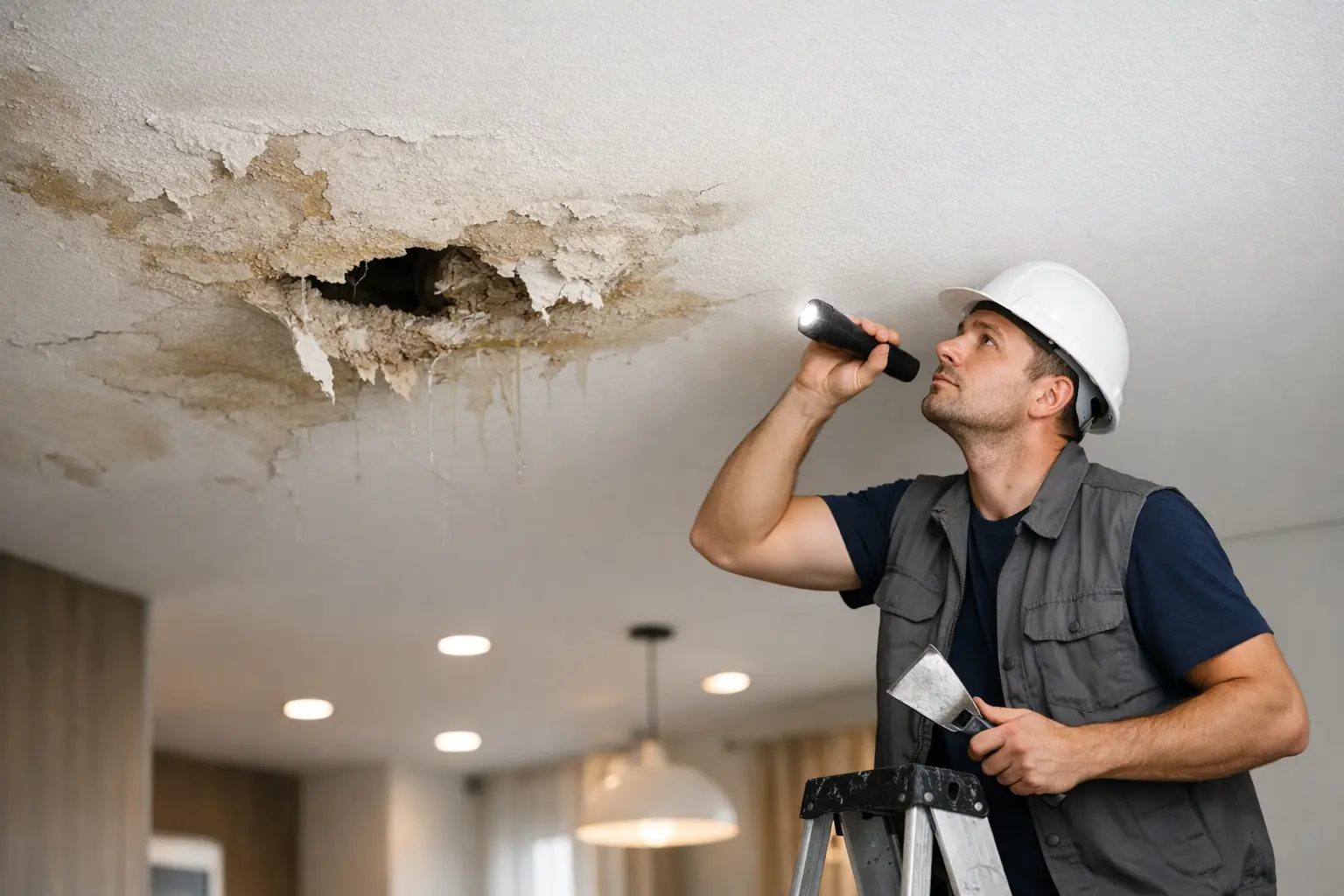
Water stains do not always mean full replacement, but they should never be ignored. A minor leak caught early may leave superficial marking only. If the plasterboard has swollen, softened, sagged or started crumbling, the material has already lost strength.
The key question is not whether the stain can be painted over. It is whether the board is still structurally sound. If it is not, replacement is the right fix after the source of the leak has been resolved.
Mould, mildew or persistent staining
Ceilings in bathrooms, laundries and older homes can suffer from long-term moisture problems. Surface mould can sometimes be treated if ventilation is improved and the ceiling lining is still sound. But where moisture has repeatedly penetrated the board, the finish often keeps failing.
Persistent staining and mould regrowth usually mean the problem is deeper than paint. At that point, replacement may be needed along with fixing the underlying ventilation or water-entry issue.
Too many old patches
A ceiling that has already been repaired several times often tells its own story. You might see uneven surfaces, visible joins, texture differences under light or patched sections that keep showing through after painting.
One good repair is sensible. Multiple old repairs across the same ceiling can make future patching harder to hide and more expensive to do well. Sometimes a fresh start delivers the cleaner result homeowners actually want.
When repair still makes sense
Not every damaged ceiling needs to come down. In many homes, a targeted repair is the better option, especially if the issue is isolated and the rest of the ceiling is solid.
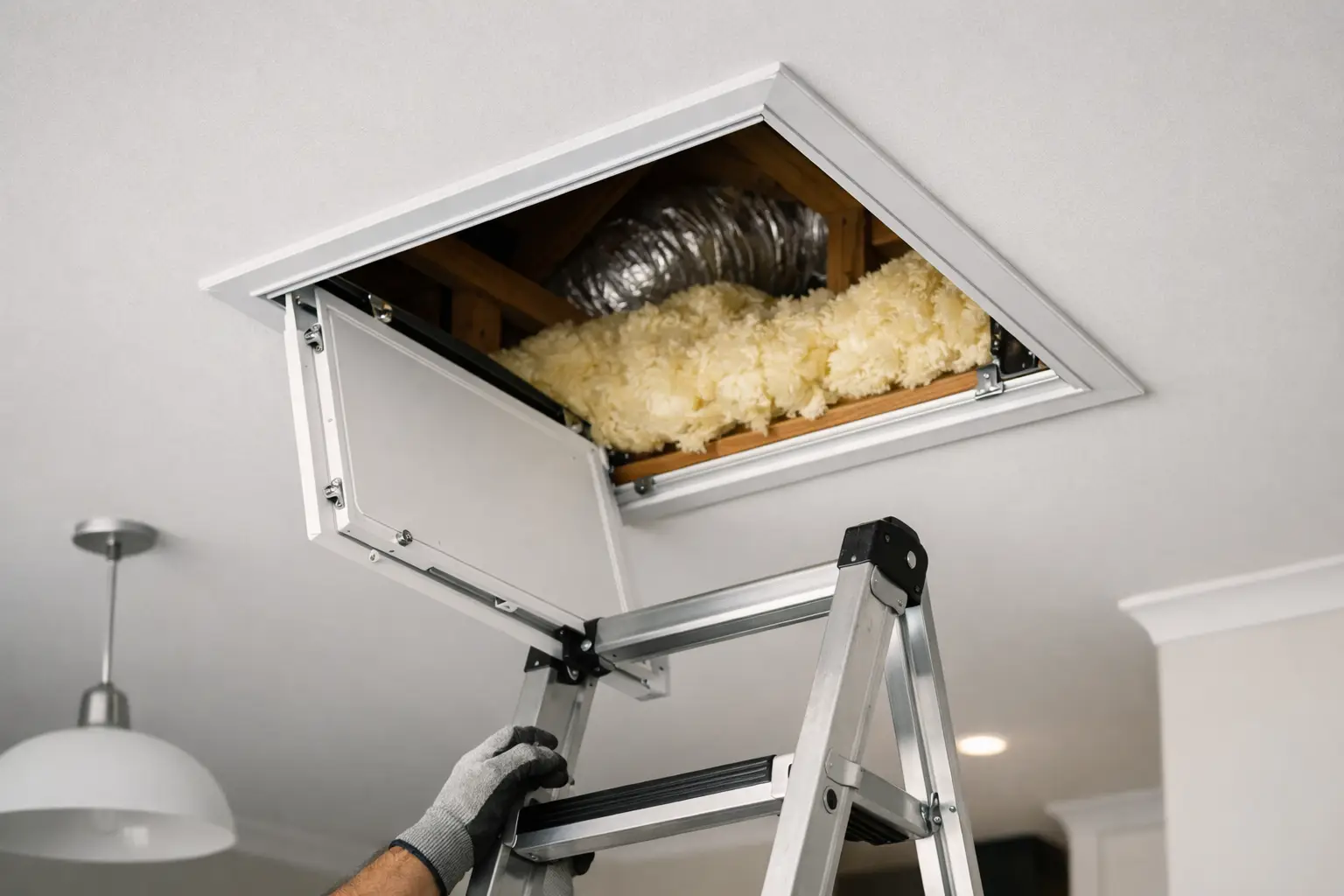
Small accidental holes, minor settlement cracks, local water damage after a short-lived leak and edge damage near manholes can often be repaired neatly. The value of repair is strongest when the damaged section is limited, matching materials are available and the finish can be blended without compromising the rest of the room.
This is also where honest quoting matters. A careful tradesperson should explain the likely outcome, not just the cheapest starting price. If a repair will look good and last, that should be said clearly. If it may remain faintly visible or carry some risk of recurrence, that should be said too.
Older ceilings need a closer look
In older Perth homes, ceiling problems are not always straightforward. Ageing plaster glass ceilings, brittle linings, movement over time and previous renovation work can all affect whether replacement is the smarter path.
Heritage-style homes also bring a different challenge. Decorative cornices, older profiles and room character may need to be preserved while replacing damaged sections. In those jobs, the goal is not just to install new board. It is to retain the look of the home and avoid obvious mismatches.
This is why one-size-fits-all advice rarely works. An older ceiling may have a small visible defect but a much larger hidden issue behind it. Equally, it may look tired yet still be very repairable in the right hands.
Cost versus value: patch now or replace properly?
Most homeowners start by asking which option costs less. That is fair enough. But the better question is which option gives better value over the next few years.
A small repair is cheaper upfront when the damage is truly localised. A ceiling replacement costs more because it involves removal, disposal, new lining, setting and making the area ready for paint. Even so, replacement can save money if repeated repairs are likely, if the ceiling has become unsafe or if the finished appearance matters.
For landlords and renovators, there is also presentation to think about. A ceiling with visible waves, old stains or patched joints can pull down the look of an otherwise tidy room. Replacing it may improve the result more than spending money trying to disguise a failing surface.
What happens during a ceiling replacement?
Many homeowners worry that replacement means major chaos through the whole house. In reality, a well-managed job should be planned carefully and kept tidy. Furniture and floors need protection, damaged material should be removed cleanly and the new lining installed with attention to level, fixing and finish.
If cornices are involved, they may need repair, matching or replacement as part of the process. If there has been water damage, the source must be fixed first. There is no point installing a new ceiling under an unresolved leak.
The final quality comes down to detail. Good setting, clean joins and proper preparation are what make the ceiling look smooth once painted. That is often the difference between a job that simply covers damage and one that feels properly finished.
How to decide with confidence
If you are unsure whether your ceiling needs repairing or replacing, do not judge it by paint alone. Fresh paint can hide a problem for a short time, but it will not solve sagging sheets, failed joints or weakened plasterboard.
Look at the pattern of the damage. Is it isolated or widespread? Has it happened before? Is the ceiling still flat, firm and dry? Are there safety concerns, especially with sagging areas? Those answers usually point you in the right direction.
The best advice is practical, not dramatic. Some ceilings genuinely need only a careful repair. Others are at the stage where replacement is the cleaner, safer and better-value option. A boutique approach helps here because the person assessing the work should also understand exactly what it takes to finish it properly.
If your ceiling is showing more than a minor cosmetic issue, trust what it is telling you. Acting early usually means a neater job, less disruption and a result you will not need to revisit six months later.