Cove Lighting vs Downlights: Which Works Best?
A ceiling can make a renovated room feel carefully finished or slightly unfinished, even when the new paint and flooring look excellent. When weighing up cove lighting vs downlights, the right choice comes down to how you use the room, the mood you want after dark and how much ceiling work is involved. In many homes, the best result is not one or the other, but a planned combination.
Cove lighting vs downlights: the key difference
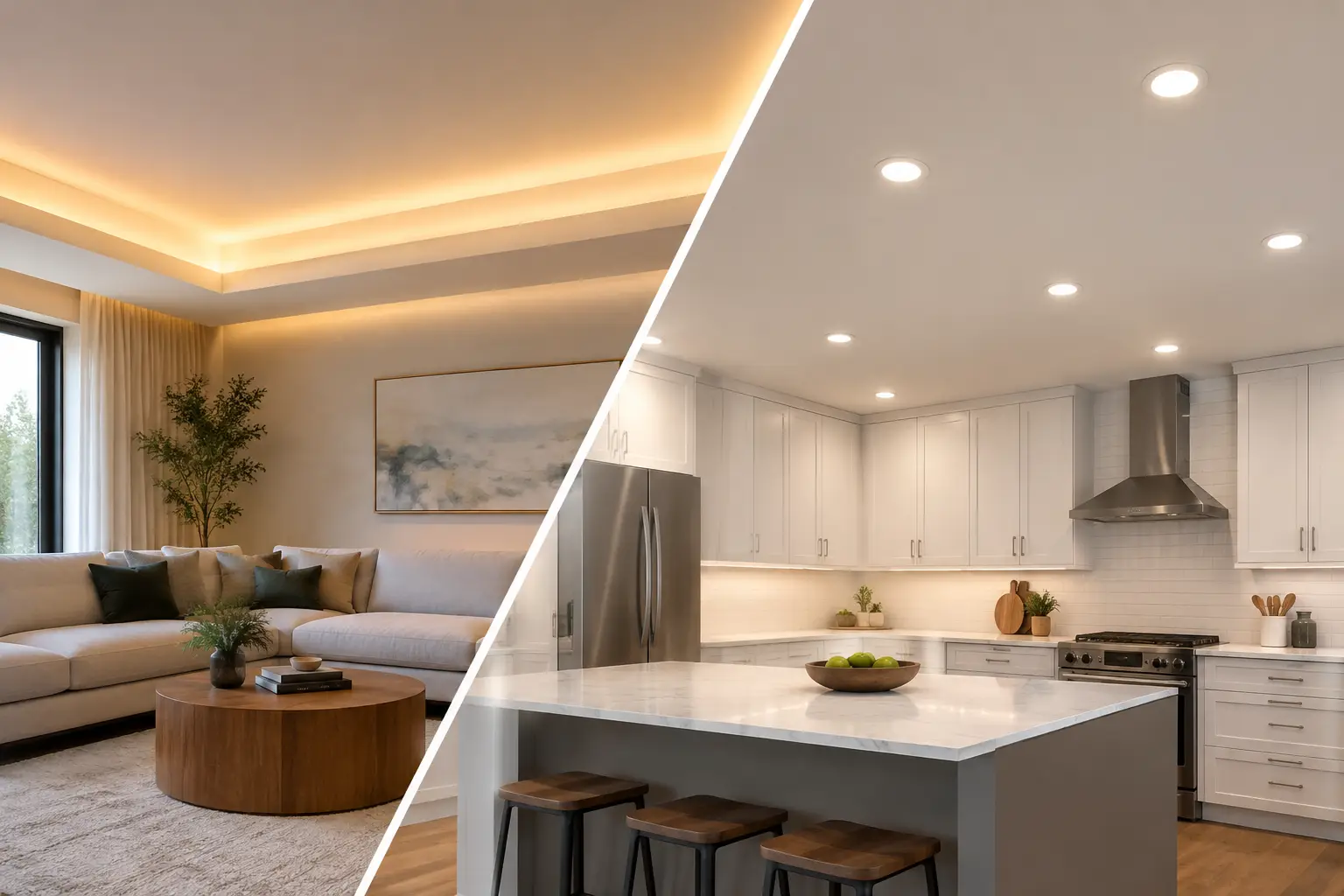
Cove lighting is concealed LED strip lighting installed within a recessed ceiling detail, bulkhead or purpose-built plasterboard cove. The light is directed up or across the ceiling rather than straight down into the room. It creates a soft wash of light, highlights ceiling lines and gives a space a more layered, architectural feel.
Downlights are recessed fittings that direct light downwards. They are practical, compact and familiar in Australian homes because they provide useful general light without a hanging fitting getting in the way. With the right layout, they work well in kitchens, bathrooms, hallways and living areas.
The difference is not simply decorative versus practical. Cove lighting changes how a room feels, while downlights make it easier to see what you are doing. A good ceiling design considers both jobs from the start.
When cove lighting is the better choice
Cove lighting suits homeowners who want a calmer, more considered finish. Because the LED strip is hidden, the source of the light disappears and the ceiling itself becomes part of the feature. This is particularly effective in living rooms, main bedrooms, home theatres, entry spaces and open-plan areas where atmosphere matters.
It can also make a standard-height room feel more spacious. The upward glow draws the eye towards the ceiling and softens hard shadow lines around the room. In a renovation with a new bulkhead, a cove can turn what might otherwise be a purely functional ceiling drop into an intentional design element.
There are practical advantages too. Cove lighting is excellent as low-level evening lighting. Rather than switching on every downlight, you can use the cove for a gentle glow while watching television, entertaining or moving through the house at night.
The trade-off is that cove lighting rarely provides enough light on its own for detailed tasks. It will not replace focused kitchen bench lighting, bathroom lighting around a mirror or bright illumination for reading and cleaning. It also requires more planning and more skilled ceiling work than cutting in standard fittings.
What makes a quality lighting cove
The finished look depends heavily on the plasterboard detail, not just the LED strip. The recess needs to be straight, consistently sized and positioned so the light source stays hidden from normal viewing angles. Corners need to be crisp, joins need to be properly set, and the surface needs to be smooth enough that light does not expose every imperfection.
LED lighting is unforgiving on poor plastering. A slight wave in the ceiling or a rough internal corner can cast a visible shadow once the lights are on. This is why a paint-ready finish and careful preparation matter as much as the lighting selection.
When downlights make more sense
Downlights are usually the more practical option where you need direct, even coverage. Kitchens are the clearest example. A well-planned layout can light walkways, work zones and cupboards without relying on a single central fitting that leaves shadows on the bench.
They also suit bathrooms, laundries, hallways, wardrobes and lower ceilings where a cove may take up visual space or add unnecessary cost. In these areas, clean, reliable light is normally the priority.
That said, more downlights do not automatically mean better lighting. A ceiling filled with evenly spaced fittings can look busy and create a harsh, flat effect. Too many bright fittings may also cause glare on tiled floors, glossy cabinetry and television screens.
The better approach is to place downlights around how the room is actually used. In a kitchen, for example, the layout should account for benches, an island and the position of people standing at work areas. In a lounge, fewer downlights on separate switching can provide flexibility without making the room feel like an office.
Cost and installation considerations
Downlights are generally less expensive to install when the ceiling is already in place and access above is straightforward. A licensed electrician cuts the openings, installs compliant fittings and connects the circuit. If the ceiling needs patching, repairs can usually be localised.
Cove lighting involves building the feature first. Depending on the design, this may mean a new bulkhead, dropped perimeter ceiling, recessed channel or framed plasterboard detail. It needs to be coordinated with the electrician before the ceiling is closed up, so there is allowance for wiring, LED drivers and access where required.
For this reason, a cove is often most cost-effective during a larger renovation, new fit-out or ceiling replacement. Adding one later is certainly possible, but it may require opening existing plasterboard, making repairs and repainting a wider area to achieve an invisible finish.
Fixed-price quoting is especially valuable for this type of work. The quote should clearly identify the ceiling construction, plastering, set-out and finishing work, as well as what the electrician will supply and install. It avoids the frustration of finding out late in the job that a bulkhead detail, painting allowance or access panel was never included.
The best option for each room
A living room often benefits from both. Cove lighting provides the relaxed background glow, while a small number of dimmable downlights gives you brighter light when needed. Separate switching lets you use either layer independently.
In a main bedroom, a perimeter cove can feel more restful than relying only on ceiling downlights. Downlights may still be useful near wardrobes or in a dressing area, but they should not be placed where they shine directly into the bed.
For kitchens, downlights remain essential for usable light. A cove above a bulkhead or around the perimeter can add warmth and depth, especially in open-plan homes, but it should support the task lighting rather than replace it.
Hallways and entries are good places for a subtle cove if you want a feature on arrival. In a narrow hallway, though, simple downlights may be the cleaner and more economical solution. Bathrooms generally need practical, suitably rated light fittings, so a lighting cove is usually an extra design feature rather than the main light source.
Plan the ceiling and electrical work together
The best time to choose between cove lighting and downlights is before framing or plasterboard installation. A simple ceiling sketch can prevent costly adjustments later. It should show bulkhead locations, air-conditioning vents, smoke alarms, curtain tracks, access points and the intended position of light fittings.
Think about colour temperature as well. Warm white light is often more comfortable in bedrooms and living spaces, while kitchens and work areas may suit a clearer neutral white. The final choice is personal, but all lighting within an open room should feel consistent.
Dimming is worth discussing early. Cove lighting is at its best when dimmable, and downlights become far more versatile when you can reduce the brightness for evening use. Your electrician can advise on compatible drivers, fittings and controls.
All electrical work must be completed by a licensed electrician. The ceiling specialist and electrician should coordinate their work closely, particularly where LED drivers or wiring need to be concealed without compromising future access or the clean lines of the finished ceiling.
Choose the detail that suits your home
There is no universal winner in cove lighting vs downlights. Downlights are the dependable workhorse for direct illumination. Cove lighting brings softness, depth and a higher-end ceiling detail. The strongest renovations use each where it earns its place rather than adding fittings simply because they are popular.
For Perth homeowners planning a new ceiling, bulkhead or feature room, Yong's Carpentry personally handles the ceiling and plasterboard finish so the lines are straight, the joins are smooth and the result is ready for the lighting plan. A well-built cove should look just as good in daylight as it does when the LEDs come on at night.